
DbcultAccessing Vault...
Director's Spotlight
Senior Film Conservator
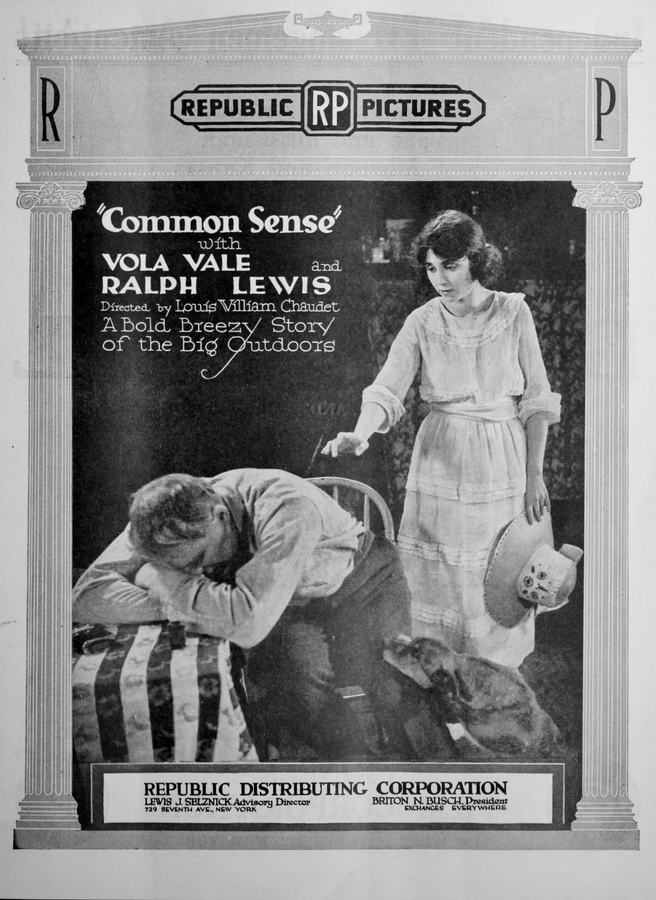
Director's Spotlight: United States
A Deep Dive into the 1920 Vision of Louis Chaudet
To understand the modern evolution of United States film, one must first look at Common Sense and the meticulous attention to detail that Louis Chaudet applied to every frame. Reflecting the political and social shifts of the 1920s, it showcases the power of Drama as a tool for social commentary.
In Common Sense, Louis Chaudet pushes the boundaries of conventional narrative. The film's unique approach to its subject matter has sparked endless debates and interpretations among cinephiles and critics alike.
In this work, Louis Chaudet explores the intersection of Drama and United States cultural identity. The meticulous attention to detail suggests a deep-seated commitment to pushing the boundaries of the medium, ensuring that Common Sense remains a relevant topic of study for Drama enthusiasts.
| Cinematography | Handheld |
| Soundtrack | Diegetic |
| Editing | Rhythmic |
| Art Direction | Naturalist |
Visualizing the convergence of Louis Chaudet's style and the core Drama narrative.
Dan Bowers, embittered and disillusioned by an unhappy marriage, seeks solitude in the Maine woods, with a lame dog as his only companion. One day he meets Violet Manners who, with her invalid mother Marion, is visiting in a nearby village. Marion is haunted by memories of the past, and one day when Violet takes Dan to meet her mother, she discovers that he is the husband who deserted her years ago. The shock causes Marion's death, but before she dies, she justifies her past behavior toward Dan.
Decades after its release, Common Sense remains a vital piece of the cinematic puzzle. Its influence can be seen in countless modern works, solidifying Louis Chaudet's status as a master of the craft in United States and beyond.