
DbcultAccessing Vault...
Director's Spotlight
Senior Film Conservator
Director's Spotlight: United States
A Deep Dive into the 1919 Vision of Louis Chaudet
The brilliance of The Long Lane's Turning (1919) is inseparable from a monumental shift in cult filmmaking spearheaded by Louis Chaudet. Occupying a unique space between cult and pure art, it serves as a blueprint for future generations of cult directors.
In The Long Lane's Turning, Louis Chaudet pushes the boundaries of conventional narrative. The film's unique approach to its subject matter has sparked endless debates and interpretations among cinephiles and critics alike.
| Cinematography | Handheld |
| Soundtrack | Diegetic |
| Editing | Elliptical |
| Art Direction | Expressionist |
Visualizing the convergence of Louis Chaudet's style and the core cult narrative.
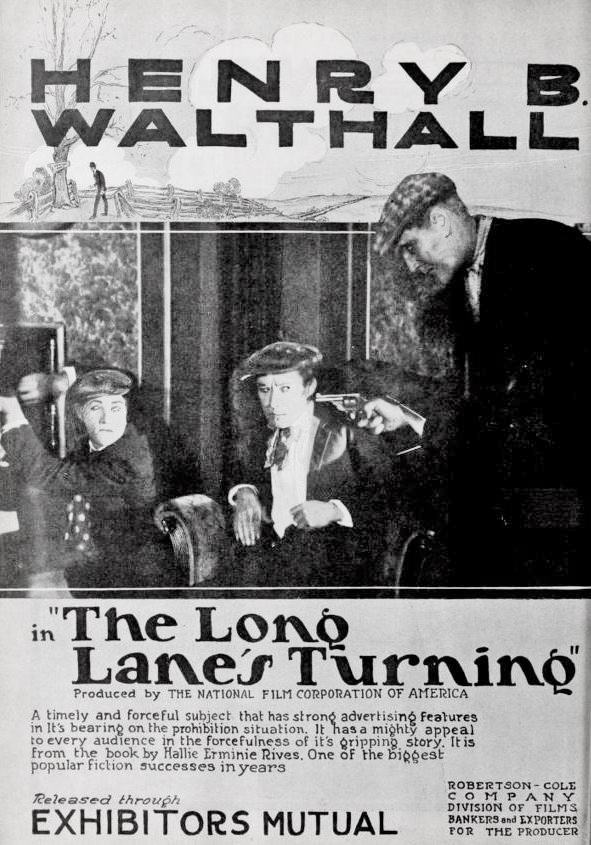
When brilliant lawyer Harry Sevier, an alcoholic, cannot cope with the prosecution's tactics, his innocent client Paddy the Brick goes to prison. After Harry's sweetheart Echo Allen, the daughter of Judge Beverly Allen, breaks their engagement, Harry leaves to combat his problem. Meanwhile, Cameron Craig, whose interest in a distilling corporation is threatened when a suit is brought before Judge Allen, steals incriminating love letters written by the Judge years earlier. Echo boards a train to offer to marry Craig for returning the letters. Harry, on the same train, and now beardless, follows Echo to Craig's home, where a burglary occurs. After Harry, not recognized by Echo, gives her the letters, Craig is shot, and Harry, along with Paddy--now a burglar--is sent to prison. Harry escapes and finds himself nominated to run for governor on the "dry" ticket. After Echo confirms that he was innocent of shooting Craig, Harry wins the election and her love.
Decades after its release, The Long Lane's Turning remains a vital piece of the cinematic puzzle. Its influence can be seen in countless modern works, solidifying Louis Chaudet's status as a master of the craft in United States and beyond.