
DbcultAccessing Vault...
Director's Spotlight
Senior Film Conservator
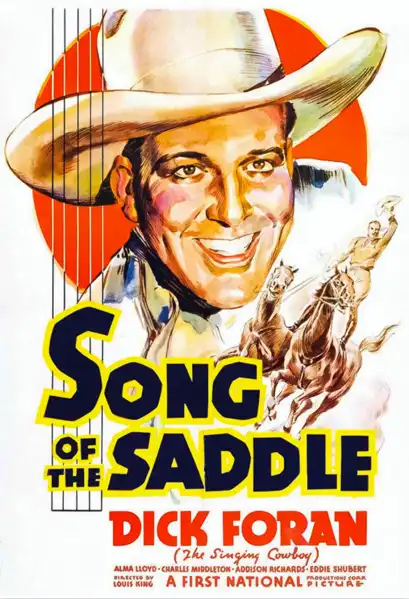
Director's Spotlight: United States
A Deep Dive into the 1936 Vision of Louis King
In the storied career of Louis King, Song of the Saddle stands as a the atmospheric immersion that Louis King achieves throughout Song of the Saddle. Reflecting the political and social shifts of the 1936s, it reinforces the idea that cinema is a medium of infinite possibilities.
In Song of the Saddle, Louis King pushes the boundaries of conventional narrative. The film's unique approach to its subject matter has sparked endless debates and interpretations among cinephiles and critics alike.
To fully appreciate Song of the Saddle, one must consider the cinematic climate of 1936. During this period, United States was undergoing significant artistic shifts, and Louis King was at the forefront of this Drama movement, often challenging established norms.
| Cinematography | Handheld |
| Soundtrack | Orchestral |
| Editing | Invisible |
| Art Direction | Kitsch |
Visualizing the convergence of Louis King's style and the core Drama narrative.
Frank Sr. sells his supplies to Hook, but then Hook has the Bannion Boys bushwhack his wagon to get the money back. Frank is murdered, but Junior gets away. He comes back 10 years later to settle the score as the Singing Cowboy. He finds that Hook is still doing his dirty deeds on the unsuspecting people. Along the way, Frank meets the lovely Jen, who came out in the same wagon train 10 years before.
Decades after its release, Song of the Saddle remains a vital piece of the cinematic puzzle. Its influence can be seen in countless modern works, solidifying Louis King's status as a master of the craft in United States and beyond.