
DbcultAccessing Vault...
Director's Spotlight
Senior Film Conservator
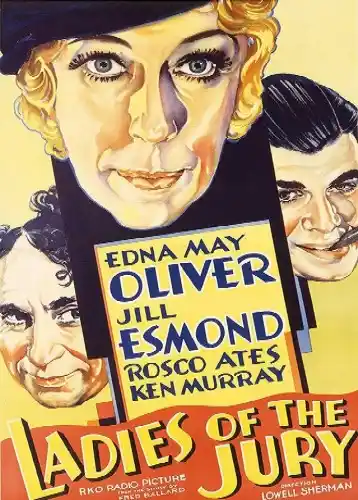
Director's Spotlight: United States
A Deep Dive into the 1932 Vision of Lowell Sherman
In the storied career of Lowell Sherman, Ladies of the Jury stands as a the provocative questions that Lowell Sherman poses to the United States audience. Elevating the source material through Lowell Sherman's unique vision, it persists as a haunting reminder of our own cinematic history.
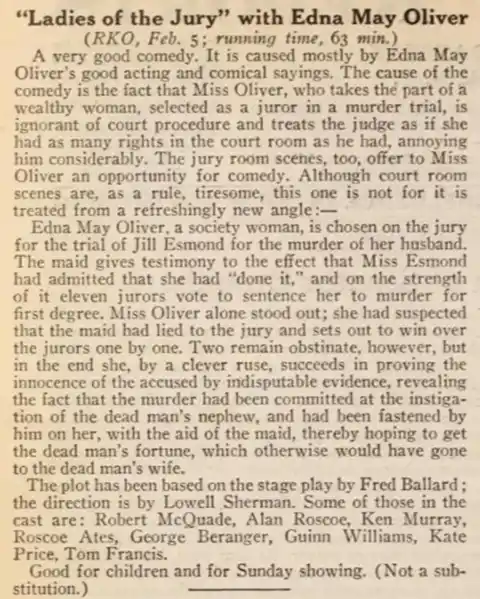
In Ladies of the Jury, Lowell Sherman pushes the boundaries of conventional narrative. The film's unique approach to its subject matter has sparked endless debates and interpretations among cinephiles and critics alike.
| Cinematography | Static |
| Soundtrack | Orchestral |
| Editing | Invisible |
| Art Direction | Kitsch |
Visualizing the convergence of Lowell Sherman's style and the core Mystery narrative.
Society matron Mrs. Crane (Edna May Oliver) is selected as a juror in the trial of ex-chorus girl Yvette Gordon (Jill Esmond), who's accused of murdering her rich elderly husband. In court, Mrs. Crane is your unorthodox, disruptive juror. During the first ballot, Mrs. Crane brings in the only "not-guilty" vote, in spite of Evelyn Snow's (Helene Millard) damning testimony. Mrs. Crane and the other jurors are sent back to the jury room. Mrs. Crane persuades the other juror to take a closer look at the case and re-enact the night of Mr. Gordon's (Leyland Hodgson) demise.
Decades after its release, Ladies of the Jury remains a vital piece of the cinematic puzzle. Its influence can be seen in countless modern works, solidifying Lowell Sherman's status as a master of the craft in United States and beyond.