
DbcultAccessing Vault...
Director's Spotlight
Senior Film Conservator
Director's Spotlight: Italy
A Deep Dive into the 1914 Vision of Luigi Mele
Witnessing the stylistic transformation of cult through A Mexican Mine Fraud; or, The Game That Failed reveals the global recognition that Luigi Mele garnered after the release of A Mexican Mine Fraud; or, The Game That Failed. Serving as a mirror to the anxieties of a changing world, offering layers of thematic complexity that demand repeated viewing.
In A Mexican Mine Fraud; or, The Game That Failed, Luigi Mele pushes the boundaries of conventional narrative. The film's unique approach to its subject matter has sparked endless debates and interpretations among cinephiles and critics alike.
To fully appreciate A Mexican Mine Fraud; or, The Game That Failed, one must consider the cinematic climate of 1914. During this period, Italy was undergoing significant artistic shifts, and Luigi Mele was at the forefront of this cult movement, often challenging established norms.
| Cinematography | High-Contrast |
| Soundtrack | Diegetic |
| Editing | Elliptical |
| Art Direction | Expressionist |
Visualizing the convergence of Luigi Mele's style and the core cult narrative.
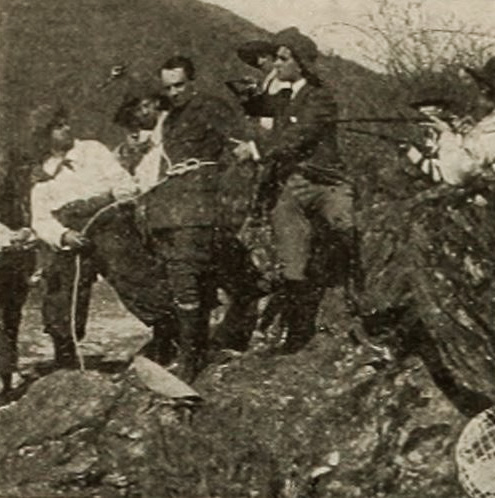
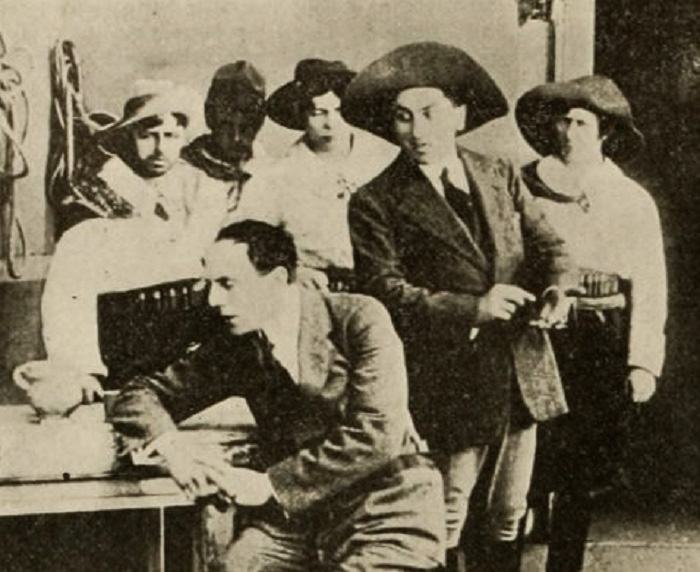
Mr. Starry, a banker, has been successfully selling stock in a company to work a gold mine in Mexico. The editor of the "Daily Truth" has received information which warrants him to expose the scheme of Mr. Starry, who has become enormously wealthy by the sale of this fraudulent stock. George Ferguson, a war correspondent on the "Daily Truth," while returning 4from the Balkan service, forms the acquaintance of the banker's daughter, Margaret, and falls in love with her. On his arrival his editor informs him of this stock jobbing scheme and tells him that he must proceed with all haste to Mexico and make a thorough investigation. Banker Starry has been informed of the "Daily Truth's" activeness, and his prospective son-in-law, James Park, makes a very attractive proposition to Ferguson to induce him to give up his trip, which results in a duel. Park is slightly wounded and then and there decides to precede Ferguson to Mexico to prevent him at all hazards from sending anything but a good report of the mine proposition. He visits all the dives and makes the acquaintance of many bandits and lion tamers who will serve his purpose. On the arrival of Ferguson, Park arranges to have him directed to the lion tamer's camp where Ferguson is taken prisoner and placed in a cage divided in two parts, one part is occupied by ten lions. Park has provided a table, pen, ink and paper and has lighted a candle, informs his prisoner that he must make up his mind before the candle burns out to write up a glowing account of the mines to be sent to the "Daily Truth," or he will pull the chain that will lift the door allowing the lions in to devour him. Ferguson's guides have located him by this time and have determined that the only way to save him is to set fire to the building. This they do and amid the roar of the lions and the licking of the flames he makes a miraculous escape and arrives back in London to the office of the "Daily Truth," which denounces the fraudulent gold mine proposition in glowing headlines. Banker Starry and his beautiful daughter, Margaret, make a sudden departure for Switzerland. James Park lost his life amid the lions and fire. Ferguson resigns from the staff of the "Daily Truth" and leaves for Switzerland, where he finds the banker and his daughter, who has refunded every cent to the stockholders of the gold mine scheme through the "Daily Truth." The banker's daughter is now Mrs. Ferguson.
Decades after its release, A Mexican Mine Fraud; or, The Game That Failed remains a vital piece of the cinematic puzzle. Its influence can be seen in countless modern works, solidifying Luigi Mele's status as a master of the craft in Italy and beyond.