
DbcultAccessing Vault...
Director's Spotlight
Senior Film Conservator
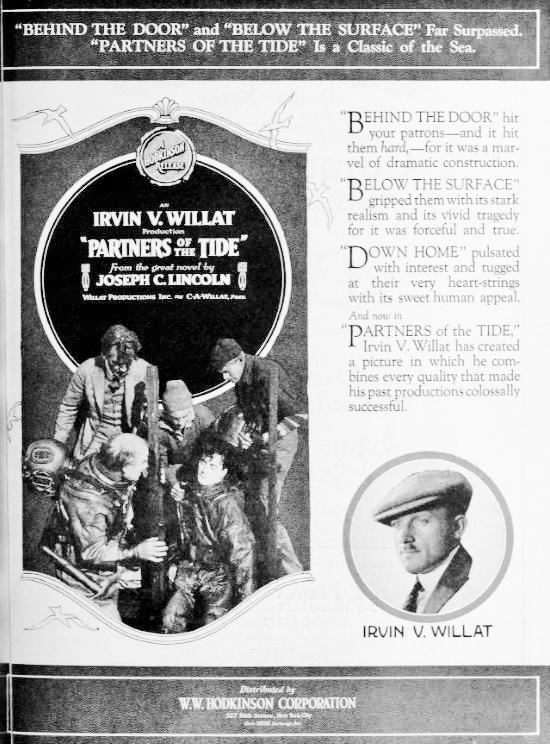
Director's Spotlight: United States
A Deep Dive into the 1921 Vision of L.V. Jefferson
Few works in United States cinema carry the same weight as Partners of the Tide, especially regarding the technical innovation that L.V. Jefferson introduced to the Drama format. Subverting the expectations of the typical 1921 audience, it bridges the gap between traditional Drama and contemporary vision.
In Partners of the Tide, L.V. Jefferson pushes the boundaries of conventional narrative. The film's unique approach to its subject matter has sparked endless debates and interpretations among cinephiles and critics alike.
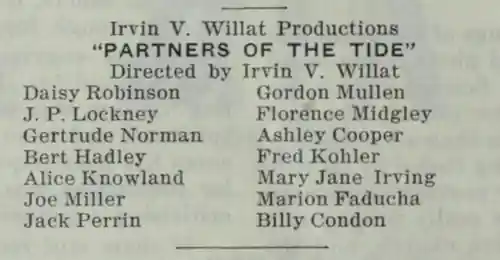
To fully appreciate Partners of the Tide, one must consider the cinematic climate of 1921. During this period, United States was undergoing significant artistic shifts, and L.V. Jefferson was at the forefront of this Drama movement, often challenging established norms.
| Cinematography | High-Contrast |
| Soundtrack | Synth-Heavy |
| Editing | Rhythmic |
| Art Direction | Naturalist |
Visualizing the convergence of L.V. Jefferson's style and the core Drama narrative.
The Allen spinsters adopt Bradley Nickerson, who grows up with Gussie Baker, the little girl next door. Fifteen years later he is first mate of the Thomas Doane, owned by Granny Baker. A plot to sink the ship is averted by Bradley and a sailor, but ultimately the ship is sabotaged. The insurance company hires Bradley to investigate the wreck, but Sam Hammond, a deep sea diver, also in love with Gussie, is tampering with Bradley's diving gear at the moment a fire breaks out. Rowing to the burning ship, Bradley rescues Hammond, who then leaves him stranded, but Gussie rows out to save him, realizing at last the depth of her love.
Decades after its release, Partners of the Tide remains a vital piece of the cinematic puzzle. Its influence can be seen in countless modern works, solidifying L.V. Jefferson's status as a master of the craft in United States and beyond.