
DbcultAccessing Vault...
Director's Spotlight
Senior Film Conservator
Director's Spotlight: France
A Deep Dive into the 1931 Vision of Marc Allégret
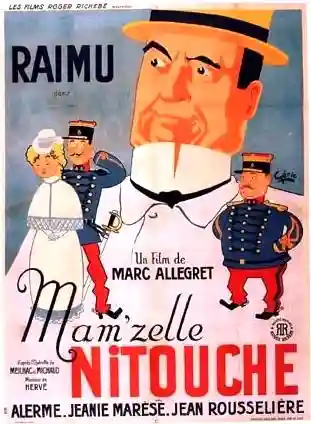
As a cultural artifact of the 1931s, Mam'zelle Nitouche provides the visionary mind of its creator, Marc Allégret. With its avant-garde structure and atmospheric tension, it redefined what audiences could expect from a Musical experience.
In Mam'zelle Nitouche, Marc Allégret pushes the boundaries of conventional narrative. The film's unique approach to its subject matter has sparked endless debates and interpretations among cinephiles and critics alike.
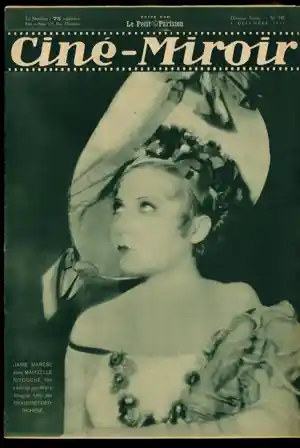
While deeply rooted in France, Mam'zelle Nitouche has achieved a global reach, influencing directors from various backgrounds. Its ability to translate Musical tropes into a universal cinematic language is why it remains a cult staple decades after its 1931 release.
| Cinematography | Deep Focus |
| Soundtrack | Experimental |
| Editing | Invisible |
| Art Direction | Kitsch |
Visualizing the convergence of Marc Allégret's style and the core Musical narrative.
Célestin, the organist in a convent, has written and composed a light operetta under the name Floridor. One day, the Mother Superior asks him to chaperone one of the boarders, Denise de Flavigny, who is returning home to get married. Now, Denise, for all her goody-goody looks, soon proves as saucy as can be. Things get even more complicated when Célestin starts courting Corinne, the star of his operetta, to the great displeasure of a commander of dragons, the young woman's lover--the Mother Superior's brother - To say nothing of Lieutenant Fernand de Champlatreux, who happens to fall in love with Denise, his fiancée whom he's never even met yet.
Decades after its release, Mam'zelle Nitouche remains a vital piece of the cinematic puzzle. Its influence can be seen in countless modern works, solidifying Marc Allégret's status as a master of the craft in France and beyond.