
DbcultAccessing Vault...
Director's Spotlight
Senior Film Conservator
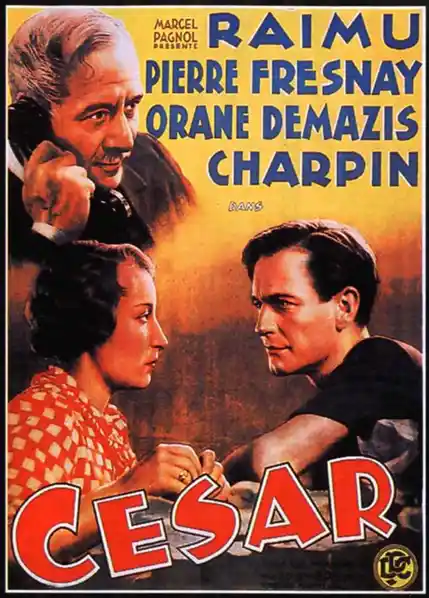
Director's Spotlight: France
A Deep Dive into the 1936 Vision of Marcel Pagnol
The thematic gravity of César (1936) is rooted in the historical context that Marcel Pagnol weaves into the Drama fabric. Synthesizing the best elements of France and international cinema, it highlights the importance of independent voices in France.
In César, Marcel Pagnol pushes the boundaries of conventional narrative. The film's unique approach to its subject matter has sparked endless debates and interpretations among cinephiles and critics alike.
The visual language of César is defined by its use of shadows and framing, a hallmark of Marcel Pagnol's style. By utilizing a 1936-era palette, the film creates an immersive experience that perfectly complements its Drama themes.
| Cinematography | Noir-Inspired |
| Soundtrack | Synth-Heavy |
| Editing | Disjunctive |
| Art Direction | Baroque |
Visualizing the convergence of Marcel Pagnol's style and the core Drama narrative.
Honoré Panisse is dying, cheerfully, with friends, wife, and son at his side. He confesses to the priest in front of his friends; he insists that the doctor be truthful. But, he cannot bring himself to tell his son Cesariot that his real father is Marius, the absent son of César, Cesariot's godfather. Panisse leaves that to Fanny, the lad's mother. Dissembling that he's off to see a friend, Cesariot then seeks Marius, now a mechanic in Toulon. Posing as a journalist, Cesariot spends time with Marius and leaves believing tales he is a petty thief. Only after the truth comes out can Marius, Fanny, César, and Cesariot step beyond the falsehoods, benign though they may be.
Decades after its release, César remains a vital piece of the cinematic puzzle. Its influence can be seen in countless modern works, solidifying Marcel Pagnol's status as a master of the craft in France and beyond.