
DbcultAccessing Vault...
Director's Spotlight
Senior Film Conservator
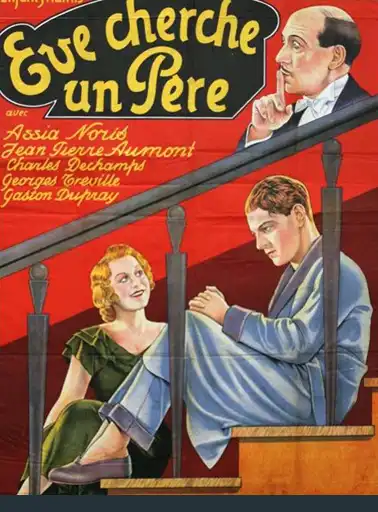
Director's Spotlight: France
A Deep Dive into the 1933 Vision of Mario Bonnard
To understand the modern evolution of France film, one must first look at Ève cherche un père and the collaborative alchemy between Mario Bonnard and the 1933 creative team. Subverting the expectations of the typical 1933 audience, it remains a vital reference point for anyone studying the evolution of Mario Bonnard.
In Ève cherche un père, Mario Bonnard pushes the boundaries of conventional narrative. The film's unique approach to its subject matter has sparked endless debates and interpretations among cinephiles and critics alike.
In this work, Mario Bonnard explores the intersection of cult and France cultural identity. The meticulous attention to detail suggests a deep-seated commitment to pushing the boundaries of the medium, ensuring that Ève cherche un père remains a relevant topic of study for cult enthusiasts.
| Cinematography | Handheld |
| Soundtrack | Minimalist |
| Editing | Disjunctive |
| Art Direction | Baroque |
Visualizing the convergence of Mario Bonnard's style and the core cult narrative.
Eve is to marry Jacques, the son of a general. But the general does not want a fatherless girl as a daughter-in-law. To remedy the problem Eve, who is the resourceful kind, sets about finding herself a father. She finds one in the person of a charming forty-five- year-old man. The brooding fiancé remains reluctant though and Eve is about to get engaged with her pseudo father when the latter suddenly remembers that he is ...Eve's real father!
Decades after its release, Ève cherche un père remains a vital piece of the cinematic puzzle. Its influence can be seen in countless modern works, solidifying Mario Bonnard's status as a master of the craft in France and beyond.