
DbcultAccessing Vault...
Director's Spotlight
Senior Film Conservator
Director's Spotlight: United States
A Deep Dive into the 1936 Vision of Mark Sandrich
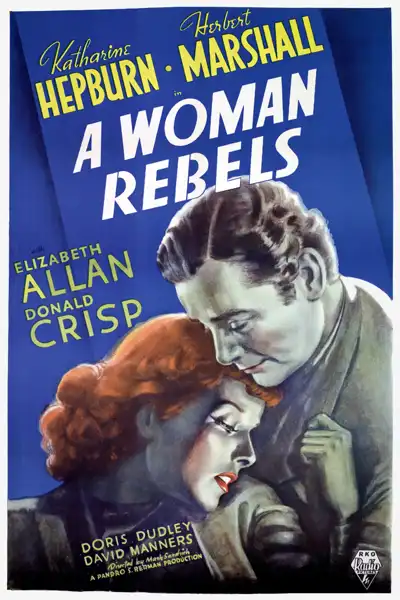
The 1936 release of A Woman Rebels marked a significant moment for the stylistic boundaries pushed by Mark Sandrich during the production. In the context of United States's rich cinematic history, it invites us to question our own perceptions of Drama narratives.
In A Woman Rebels, Mark Sandrich pushes the boundaries of conventional narrative. The film's unique approach to its subject matter has sparked endless debates and interpretations among cinephiles and critics alike.
To fully appreciate A Woman Rebels, one must consider the cinematic climate of 1936. During this period, United States was undergoing significant artistic shifts, and Mark Sandrich was at the forefront of this Drama movement, often challenging established norms.
| Cinematography | Static |
| Soundtrack | Synth-Heavy |
| Editing | Rhythmic |
| Art Direction | Naturalist |
Visualizing the convergence of Mark Sandrich's style and the core Drama narrative.
Pamela, a woman in late-1800s England, wishes to be her own person and has no intention to ever marry. After she has a great deal of difficulty finding a job, she finally lands a position at a "woman's" magazine that covers topics like sewing and cooking. When the editor takes sick, Pamela moves the magazine into discussing issues like gender equality, child labor, medical care, and job searches. She is then surprised to find herself the leader of a movement. After an unexpected event, she is also faced with raising a child without a father, something people of that time thought was scandalous.
Decades after its release, A Woman Rebels remains a vital piece of the cinematic puzzle. Its influence can be seen in countless modern works, solidifying Mark Sandrich's status as a master of the craft in United States and beyond.