
DbcultAccessing Vault...
Director's Spotlight
Senior Film Conservator

Director's Spotlight: United States
A Deep Dive into the 1922 Vision of Marshall Neilan
The thematic gravity of Penrod (1922) is rooted in the historical context that Marshall Neilan weaves into the Comedy fabric. Synthesizing the best elements of United States and international cinema, it highlights the importance of independent voices in United States.
In Penrod, Marshall Neilan pushes the boundaries of conventional narrative. The film's unique approach to its subject matter has sparked endless debates and interpretations among cinephiles and critics alike.
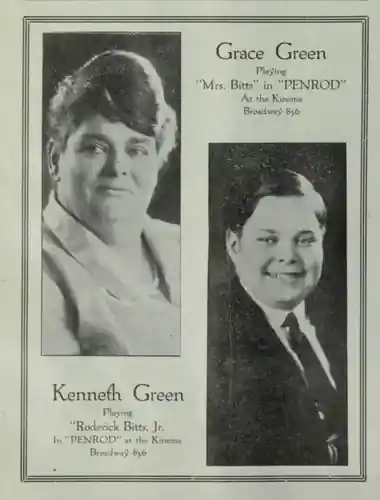
While deeply rooted in United States, Penrod has achieved a global reach, influencing directors from various backgrounds. Its ability to translate Comedy tropes into a universal cinematic language is why it remains a cult staple decades after its 1922 release.
| Cinematography | Noir-Inspired |
| Soundtrack | Minimalist |
| Editing | Disjunctive |
| Art Direction | Baroque |
Visualizing the convergence of Marshall Neilan's style and the core Comedy narrative.
With his reputation as a troublemaker, Penrod Schofield is the president of the American Boys' Protective Association, which meets each week to report the wrongs inflicted by parents, disagreeable neighbors, and inconsiderate policemen. During the busy summer Penrod ruins an amateur theatrical production and shocks a dancing class with his antics during a formal dance. Rupe Collins, the town tough boy, bullies the gang until he runs afoul of Herman and Verman, two children who get rid of Rupe with the use of scythes and lawnmowers . Outraged leading citizens are alarmed by the gang's mischief, however when the boys capture two notorious bandits, the threats turn to praise and Penrod becomes the hero of lovely Marjorie Jones.
Decades after its release, Penrod remains a vital piece of the cinematic puzzle. Its influence can be seen in countless modern works, solidifying Marshall Neilan's status as a master of the craft in United States and beyond.