
DbcultAccessing Vault...
Director's Spotlight
Senior Film Conservator
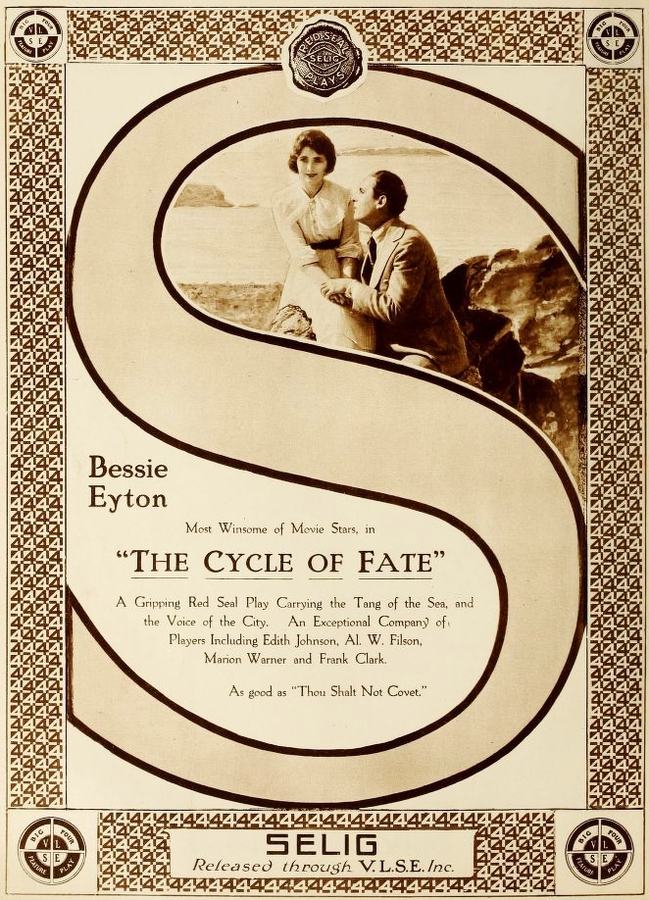
Director's Spotlight: United States
A Deep Dive into the 1916 Vision of Marshall Neilan
Peeling back the layers of Marshall Neilan's The Cycle of Fate exposes the collaborative alchemy between Marshall Neilan and the 1916 creative team. Anchored by a narrative that is both personal and universal, it reinforces the idea that cinema is a medium of infinite possibilities.
In The Cycle of Fate, Marshall Neilan pushes the boundaries of conventional narrative. The film's unique approach to its subject matter has sparked endless debates and interpretations among cinephiles and critics alike.
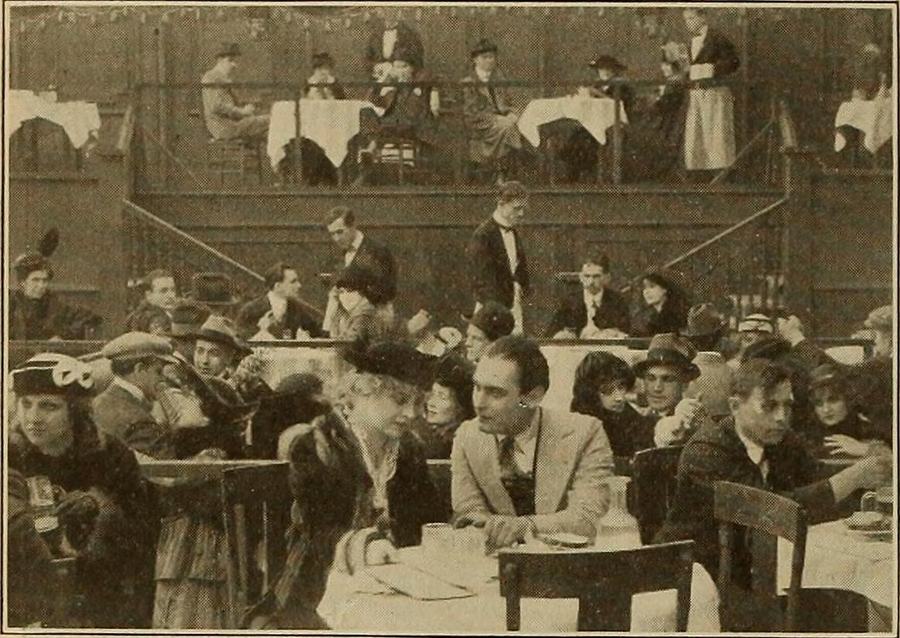
In this work, Marshall Neilan explores the intersection of cult and United States cultural identity. The meticulous attention to detail suggests a deep-seated commitment to pushing the boundaries of the medium, ensuring that The Cycle of Fate remains a relevant topic of study for cult enthusiasts.
| Cinematography | Static |
| Soundtrack | Minimalist |
| Editing | Slow-Burn |
| Art Direction | Brutalist |
Visualizing the convergence of Marshall Neilan's style and the core cult narrative.
Aaron Strong is a seafaring man. Not only has he won an honest living as the captain of a sailing vessel, but he is unusually happy in the love of his young wife, Maybelle. When Aaron Strong embarks on his voyages, Sandy Hodge, his wife's father, an old sea salt of Scottish descent, cares for Maybelle. A terrific storm occurs at sea and Aaron's frail craft is smashed to pieces. He tries to save himself by escaping in a dory, but he finally succumbs after scrawling a note to his wife. Later the little boat is washed ashore with his lifeless body. It is found by some fisherman, and when Maybelle is informed of her husband's death she falls unconscious to the floor knocking a lamp over which burns her hand. Months following when her two children are born, a boy and a girl, each bears a red mark on his hand, similar to the one on their mother's hand which was caused by the falling lamp. Maybelle never recovers from the shock of her husband's death, and she soon dies. The two children are left to the care of old Sandy. Although he secretly loves the little chap who so resembles Sandy's beloved daughter, yet when the boy runs away from home, old Sandy is not at all conscience stricken. The boy falls in with a gang of toughs and has become known as "Red Hand" leader of a gang of crooks. Fourteen years later, Maybelle Strong, Joe's twin sister, teaches a little school in Oceancove. Old Sandy never talks to her of her brother, whom she has almost forgotten, but the old Scotch grandfather insists that Maybelle bring home to him her pay envelope, for Sandy is thrifty. In the city there is a rivalry among the "gun men" and Sid Aldrich, gang leader, gambler and crook, flees the city. He arrives at Oceancove seeking seclusion. There he meets Maybelle Strong, who learns to love the stranger. Aldrich plots to entice Maybelle to the city. Chided by the irate Sandy because she has expended a small amount of her earnings for a new hat, Maybelle promises to go with Aldrich upon his agreement to marry her when they reach the city. "Boss" Kipper, a ward politician, is introduced to Maybelle by Aldrich, who poses as Kipper's nephew. Kipper is immediately attracted to the girl. Summoned hurriedly from the room, through the instrumentality of Fate, Kipper places the now unconscious Maybelle into the keeping of Joe Strong, alias "Red Hand," who is one of "Boss" Kipper's strongest followers. While watching over the girl, "Red Hand" espies the birthmark on her hand; he also glances at the birthmark on his own hand. He has a vague memory of a little sister, marked like himself through a mother's suffering. His better nature comes to the front, and he resolves to save the girl at any cost. "Boss" Kipper returns to the room. He finds the door locked and barred. He orders his henchmen to shatter it. In the meantime Joe Strong runs to the telephone, summons the police and the girl is rescued just in time. The "Boss" vows revenge on Joe Strong. Strong has been endeavoring to live straight since he rescued Maybelle, and his girl friend, Mame of the tenements, in ill health, has received all of Joe's attention. He is informed that the girl must be sent to a sanitarium for treatment if her life would be saved. Kipper plots with Aldrich, the gambler. Joe is tempted to rob a home. He finds there Aldrich confronting Maybelle, whom Joe had so recently saved. Joe takes the life of the unscrupulous gambler, and tells Maybelle to claim that she shot the man in self-defense. Joe escapes the house and joins the girl of the tenements whom he loves, and who is awaiting him at the boat landing. As he buys his transportation, Joe comes face to face with Detective Treem. Joe believes all is lost. The detective, however, believing that the death of Aldrich was for the good of mankind, and appreciating that Joe has been the victim of a frame-up, tells him to "beat it," and Joe Strong and his girl sail away from the city and all its wickedness.
Decades after its release, The Cycle of Fate remains a vital piece of the cinematic puzzle. Its influence can be seen in countless modern works, solidifying Marshall Neilan's status as a master of the craft in United States and beyond.