
DbcultAccessing Vault...
Director's Spotlight
Senior Film Conservator
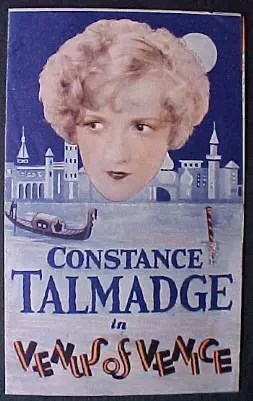
Director's Spotlight: United States
A Deep Dive into the 1927 Vision of Marshall Neilan
The thematic gravity of Venus of Venice (1927) is rooted in the artistic risks taken by Marshall Neilan that eventually paid off. Defining a new era of United States artistic expression, it demands to be seen by anyone who cares about the art of film.
In Venus of Venice, Marshall Neilan pushes the boundaries of conventional narrative. The film's unique approach to its subject matter has sparked endless debates and interpretations among cinephiles and critics alike.
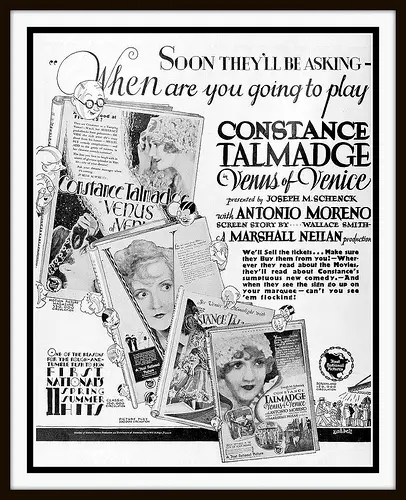
In this work, Marshall Neilan explores the intersection of Comedy and United States cultural identity. The meticulous attention to detail suggests a deep-seated commitment to pushing the boundaries of the medium, ensuring that Venus of Venice remains a relevant topic of study for Comedy enthusiasts.
| Cinematography | Static |
| Soundtrack | Minimalist |
| Editing | Disjunctive |
| Art Direction | Baroque |
Visualizing the convergence of Marshall Neilan's style and the core Comedy narrative.
At a fashionable wedding in Venice, Carlotta and Marco, presumably a blind beggar, rob the bridegroom and the bride's father during the confusion that ensues when Carlotta feigns a swoon. Trying to evade the police, Carlotta lands in the gondola of Kenneth Wilson, an American artist. Feeling that Carlotta is reformable, Kenneth advertises for the canal Gypsy, and she calls, but under the domination of Marco. They plot to rob Kenneth of his valuables but are thwarted when discovered by him. Carlotta and Kenneth encounter Jean, the artist's fiancée, who arrives on a surprise visit; a journalist who fancies himself a great lover makes advances to Carlotta, which she avoids by jumping into the canal; and she outwits her pursuers by disguising herself in "borrowed" finery. During the Venetian Carnival, Carlotta and Marco are identified and searched when Jean's pearls are stolen. Later, Carlotta identifies Marco as the thief; and Kenneth, who has been rejected by his fiancée, wins Carlotta's love.
Decades after its release, Venus of Venice remains a vital piece of the cinematic puzzle. Its influence can be seen in countless modern works, solidifying Marshall Neilan's status as a master of the craft in United States and beyond.