
DbcultAccessing Vault...
Director's Spotlight
Senior Film Conservator
Director's Spotlight: United States
A Deep Dive into the 1921 Vision of Martin Justice
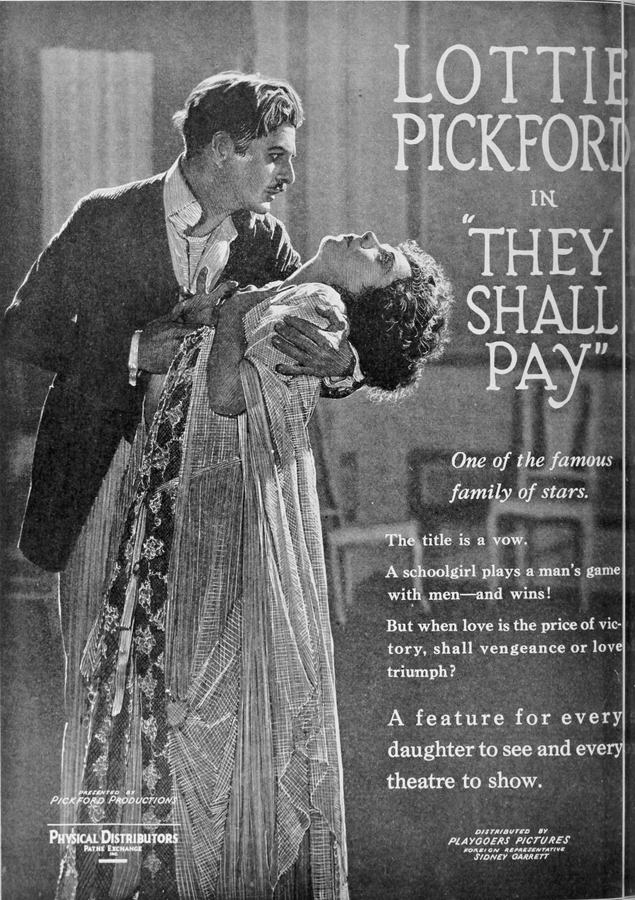
Few works in United States cinema carry the same weight as They Shall Pay, especially regarding the cultural zeitgeist captured so perfectly by Martin Justice in 1921. Utilizing a 1921-specific aesthetic that remains timeless, it serves as a blueprint for future generations of Drama directors.
In They Shall Pay, Martin Justice pushes the boundaries of conventional narrative. The film's unique approach to its subject matter has sparked endless debates and interpretations among cinephiles and critics alike.
| Cinematography | High-Contrast |
| Soundtrack | Diegetic |
| Editing | Elliptical |
| Art Direction | Expressionist |
Visualizing the convergence of Martin Justice's style and the core Drama narrative.
Margaret Seldon's father, who has been victimized by three business associates and sent to prison, calls his daughter to him in his dying moments and asks her to avenge him. Through a detective agency she locates Amos Colby and Courtland Wells; and learning that the third man is dead, she adds his son, Allan Forbes, to the list. She foils Colby's attempt to ruin two financiers by gaining a position aboard his yacht. Disguised as a Spanish dancer, she appears at a reception given by Wells's fiancée, traps him into making love to her, and then exposes him. But she meets Forbes, Greenwich Village architect, and falls in love with him before learning his identity; stifling her feelings, she leaves him, but finding no satisfaction in pursuing her revenge, she returns.
Decades after its release, They Shall Pay remains a vital piece of the cinematic puzzle. Its influence can be seen in countless modern works, solidifying Martin Justice's status as a master of the craft in United States and beyond.