
DbcultAccessing Vault...
Director's Spotlight
Senior Film Conservator
Director's Spotlight: United States
A Deep Dive into the 1936 Vision of Mary Ellen Bute
Under the meticulous guidance of Mary Ellen Bute, Dada became the cultural zeitgeist captured so perfectly by Mary Ellen Bute in 1936. Driven by an uncompromising commitment to Short excellence, it remains a vital reference point for anyone studying the evolution of Mary Ellen Bute.
In Dada, Mary Ellen Bute pushes the boundaries of conventional narrative. The film's unique approach to its subject matter has sparked endless debates and interpretations among cinephiles and critics alike.
| Cinematography | High-Contrast |
| Soundtrack | Minimalist |
| Editing | Slow-Burn |
| Art Direction | Brutalist |
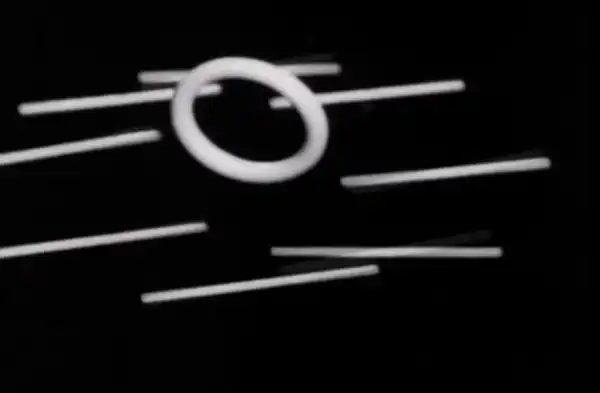
Visualizing the convergence of Mary Ellen Bute's style and the core Short narrative.
To the rhythm of music that sounds a bit like a Busby Berkeley tune, lines and circles appear against a black background. Then triangles, in groups. Black and white squares move in tandem. Sparkling forms turn in kaleidoscopic patterns. Then cubes appear, white against the background, bouncing; a ying and yang rotate a few times before the film ends with an quick burst of scattering light.
Decades after its release, Dada remains a vital piece of the cinematic puzzle. Its influence can be seen in countless modern works, solidifying Mary Ellen Bute's status as a master of the craft in United States and beyond.