
DbcultAccessing Vault...
Director's Spotlight
Senior Film Conservator
Director's Spotlight: United States
A Deep Dive into the 1922 Vision of Mason N. Litson
The artistic breakthrough represented by The Big Scoop in 1922 highlights the philosophical inquiries that Mason N. Litson embeds within the narrative. Framed by the hauntingly beautiful landscapes of the production, it leaves an indelible mark on the soul of the viewer.
In The Big Scoop, Mason N. Litson pushes the boundaries of conventional narrative. The film's unique approach to its subject matter has sparked endless debates and interpretations among cinephiles and critics alike.
To fully appreciate The Big Scoop, one must consider the cinematic climate of 1922. During this period, United States was undergoing significant artistic shifts, and Mason N. Litson was at the forefront of this Short movement, often challenging established norms.
| Cinematography | Noir-Inspired |
| Soundtrack | Experimental |
| Editing | Invisible |
| Art Direction | Kitsch |
Visualizing the convergence of Mason N. Litson's style and the core Short narrative.
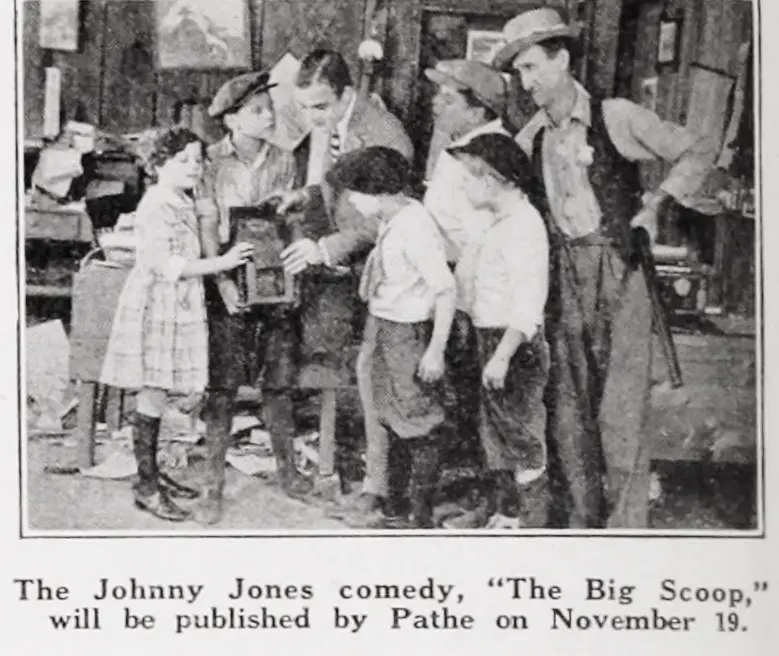
Johnny is the editor of a little local paper full of scintillating gossip called "The Whisper," and Gertrude is the society editor. Everyone in town is saying that it has more news than "The Daily Tribune," and Old Man Jones is very hot under the collar. All "The Whisper" needs is a "big scoop," and with the aid of a false-alarm burglar scare and a flash-light photograph they get the picture of what they think is the burglar, and they sell out at a good price to Old Man Jones, the Tribune owner, just before their latest issue appears with a front page picture that nearly gives the Old Man apoplexy.
Decades after its release, The Big Scoop remains a vital piece of the cinematic puzzle. Its influence can be seen in countless modern works, solidifying Mason N. Litson's status as a master of the craft in United States and beyond.