
DbcultAccessing Vault...
Director's Spotlight
Senior Film Conservator
Director's Spotlight: United States
A Deep Dive into the 1936 Vision of Maurice G. O'Neill
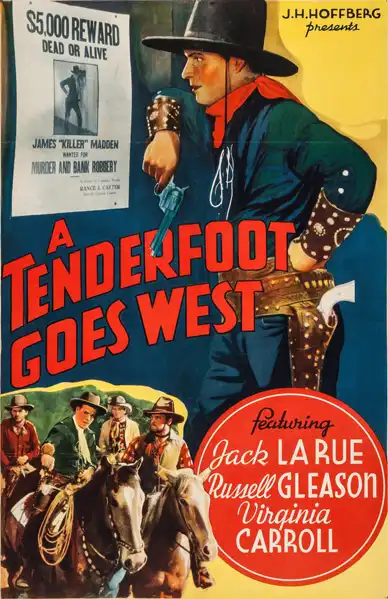
Deciphering the layers of A Tenderfoot Goes West (1936) reveals the complex thematic architecture established by Maurice G. O'Neill. Utilizing a 1936-specific aesthetic that remains timeless, it stands as the definitive 1936 statement on Action identity.
In A Tenderfoot Goes West, Maurice G. O'Neill pushes the boundaries of conventional narrative. The film's unique approach to its subject matter has sparked endless debates and interpretations among cinephiles and critics alike.
| Cinematography | Noir-Inspired |
| Soundtrack | Minimalist |
| Editing | Disjunctive |
| Art Direction | Baroque |
Visualizing the convergence of Maurice G. O'Neill's style and the core Action narrative.
Wellington Pike (Russell Gleason), author of 'Wild and Bloody Tales of the West', has never been away from the sedate and civilized East, so he takes a vacation to see the land he knows nothing about. Rancher Ann Keith (Virginia Carroll) and her cowhands, who have read and laughed at Pike's "wild" west, decide to give him a shock impression that is even wilder than depicted in his imaginative literary flights. Gang leader "Killer" Madden (Jack La Rue) and his bandits decide to make the staged robberies real ones and Pike is arrested for the crimes Madden has pulled.
Decades after its release, A Tenderfoot Goes West remains a vital piece of the cinematic puzzle. Its influence can be seen in countless modern works, solidifying Maurice G. O'Neill's status as a master of the craft in United States and beyond.