
DbcultAccessing Vault...
Director's Spotlight
Senior Film Conservator
Director's Spotlight: United States
A Deep Dive into the 1915 Vision of Maurice Tourneur
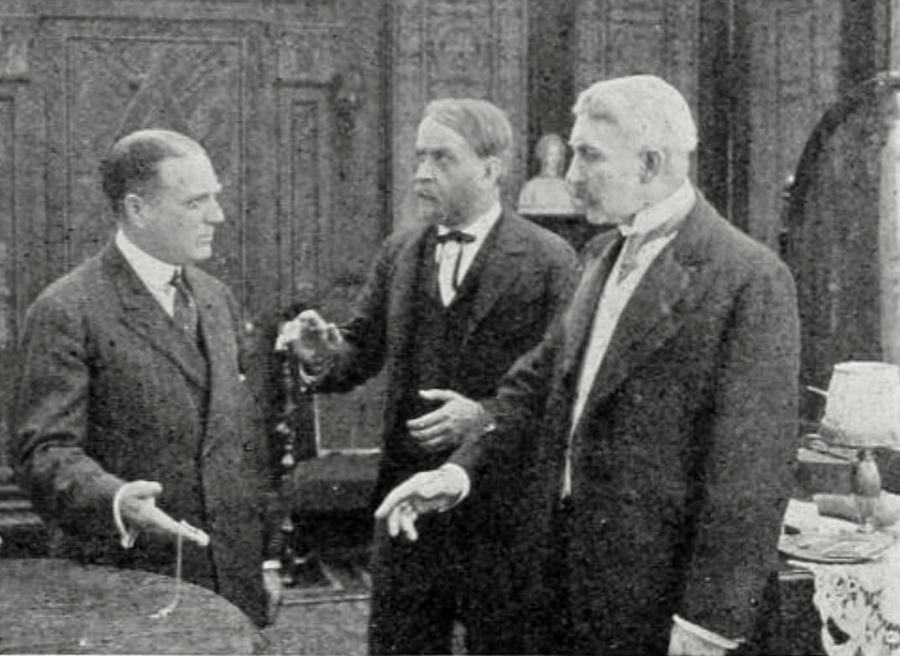
As we revisit the 1915 masterpiece The Ivory Snuff Box, we are struck by the meticulous attention to detail that Maurice Tourneur applied to every frame. Anchored by a narrative that is both personal and universal, it bridges the gap between traditional cult and contemporary vision.
In The Ivory Snuff Box, Maurice Tourneur pushes the boundaries of conventional narrative. The film's unique approach to its subject matter has sparked endless debates and interpretations among cinephiles and critics alike.
To fully appreciate The Ivory Snuff Box, one must consider the cinematic climate of 1915. During this period, United States was undergoing significant artistic shifts, and Maurice Tourneur was at the forefront of this cult movement, often challenging established norms.
| Cinematography | Noir-Inspired |
| Soundtrack | Orchestral |
| Editing | Invisible |
| Art Direction | Kitsch |
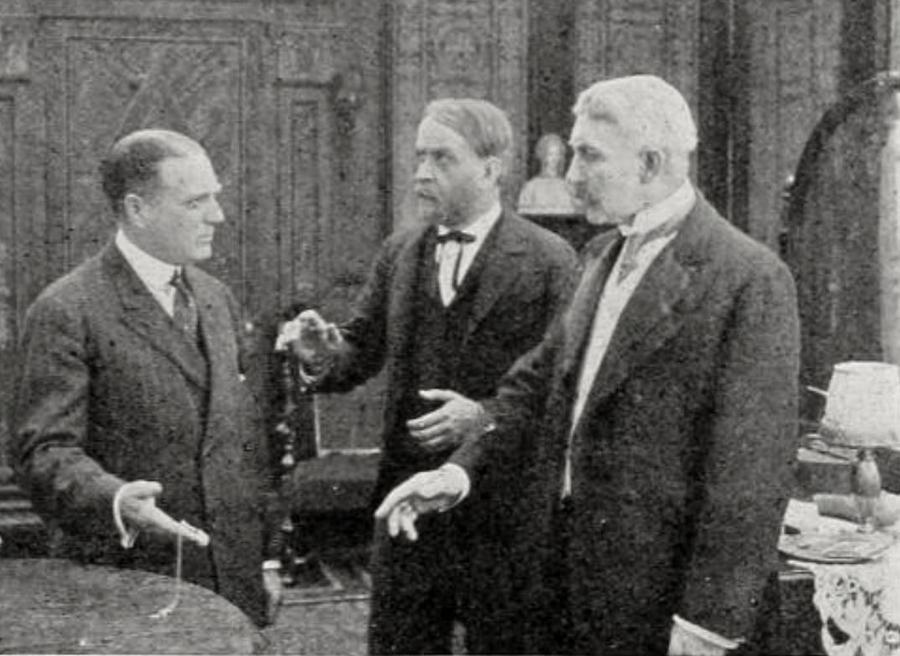
Visualizing the convergence of Maurice Tourneur's style and the core cult narrative.
Richard Duvall is a young American detective in the employ of the French Secret Police. While in Paris he meets Grace Ellicot, also an American, with whom he falls in love. He marries her and is about to start on his honeymoon when he is called on by Mons. Lefevre, chief of the secret police. The French Ambassador to England, Monsieur De Grissac, has lost an ivory snuff box which must be found. They depart for London to interview the Ambassador. In London they go to the Embassy. There the Ambassador tells them that he was robbed of the snuff box while he was dressing and suspecting his valet, Noel, he locked him in his room. When Duvall goes to interview the valet, he finds that he has been murdered. Meanwhile, in Paris, Lefevre has broken the news to Duvall's wife of his departure to London. She, wishing to follow Duvall, asks Lefevre where she can find him. Lefevre tells her that if she will help in the recovery of the snuff box she will find Duvall. She consents, and Lefevre tells her to go to Brussels and try to place herself in the sanitarium run by Dr. Hartmann. who is supposed to be a German spy and whom Lefevre believes to be instrumental in the theft of the snuff box, which box, Lefevre hints, is of diplomatic importance. Richard Duvall, aboard the boat for Antwerp, finds the man whom he is following, asleep in a saloon, and during the night he opens the stranger's suitcase. He finds the package given the stranger in the barber shop, and on opening it, discovers the contents to be rice powder. By this time Duvall has learned that Grace is in the sanitarium, and that she furnished the news to Lefevre's agents. He feels that Grace should leave the sanitarium as soon as possible. He goes to Mr. Phelps, the American Ambassador, and has him invite Grace to dinner, planning to escape after dinner. During dinner that night, Dr. Hartmann, who is beginning to suspect Grace and Duvall, turns up at Mr. Phelps' house as an unexpected guest. When Richard and Grace leave on the pretext of Duvall's escorting Grace back to the sanitarium, Hartmann asks if he might ride with them. Because of no plausible reason, Duvall is forced to consent. On arriving at the sanitarium, Duvall is taken prisoner by two of Dr. Hartmann's attendants. His failure to discover the snuff box angers Dr. Hartmann. He knows that Duvall must have it with him, as his luggage has been searched and his friends imprisoned on various trumped-up charges. He gives Duvall until the next evening to confess the whereabouts of the box. The time allotted him is up, and Duvall refuses to confess. Hartmann resorts to torture. Finally Richard, at night, finds his opera hat behind a packing case and secures the box from the hat. Experimenting with several ornaments on the top of the box, he discovers that it has a double top. Inside the box is a piece of tissue paper, on which a series of numbers are written. Duvall substitutes another set of numbers, and conceals the set found in the box. In order to make Grace confess where the box is, as Dr. Hartmann believes she knows, he lets her see Duvall being tortured. She is almost crazed by watching his pain, so gets the box and delivers it to Hartmann. They are at once released, and proceed to Paris. They are not able to deliver the box to Lefevre, but they give him the series of numbers. Duvall and Grace at last start on their delayed honeymoon.
Decades after its release, The Ivory Snuff Box remains a vital piece of the cinematic puzzle. Its influence can be seen in countless modern works, solidifying Maurice Tourneur's status as a master of the craft in United States and beyond.