
DbcultAccessing Vault...
Director's Spotlight
Senior Film Conservator
Director's Spotlight: France
A Deep Dive into the 1914 Vision of Maurice Tourneur
As a cultural artifact of the 1914s, The Sparrow provides the visionary mind of its creator, Maurice Tourneur. With its avant-garde structure and atmospheric tension, it redefined what audiences could expect from a cult experience.
In The Sparrow, Maurice Tourneur pushes the boundaries of conventional narrative. The film's unique approach to its subject matter has sparked endless debates and interpretations among cinephiles and critics alike.
The visual language of The Sparrow is defined by its use of shadows and framing, a hallmark of Maurice Tourneur's style. By utilizing a 1914-era palette, the film creates an immersive experience that perfectly complements its cult themes.
| Cinematography | Deep Focus |
| Soundtrack | Minimalist |
| Editing | Slow-Burn |
| Art Direction | Brutalist |
Visualizing the convergence of Maurice Tourneur's style and the core cult narrative.
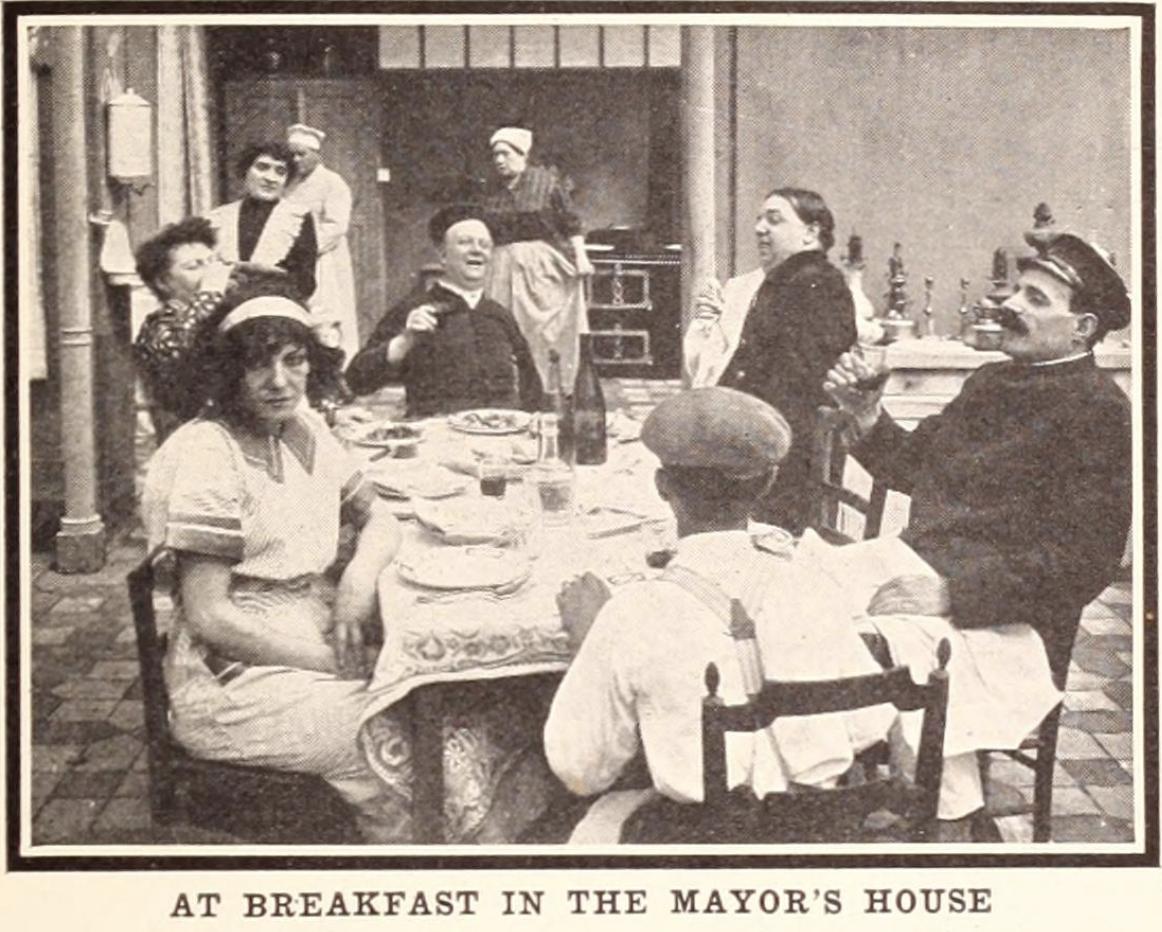
Mafflu, the old clown, out walking is greatly surprised to see a baby girl, fast asleep, holding in her hand a chunk of bread, at which a large number of sparrows are pecking. Mafflu decides to take the child away with him and care for it. He does this, but upon arriving at the circus where he is employed, the owner and the rest of the company have but a cold greeting for the little newcomer. However, Mafflu clings to the child. The Sparrow, as she is called, grows up and becomes the drudge of the circus. One evening, though worn out by fatigue and hunger, she must still prepare for the evening show. Scarcely has she mounted her horse and made a few rounds of the arena, when she falls and lies unconscious in the center of the arena. Romarin is in a rage and strikes the girl. Mafflu is disgusted and sends an official to the mayor. M. de Ganges, who that night happened to be a spectator. M. de Ganges takes the Sparrow with him to his home and she bids farewell to the only two beings she has ever loved, her adopted father and a poodle. Next morning, on awaking, she can hardly believe that all the beautiful things about her are a reality. The dream is indeed but a fleeting one. The Sparrow is received with jeers and mockery when she puts in an appearance in the servants' dining-room for her meals. A few days later a horse runs away in the park and the Sparrow cleverly manages to master it. This makes the groom, Charley, madly jealous. Charley abuses the Sparrow and a free fight ensues. M. de Ganges intervenes, and, disgusted with the groom's impudence, discharges him. The Sparrow is now received into the intimacy of the Mayor's family. She has fine clothes and jewels. A friend of the family, the banker Schlemmer, spends a few days at the mansion and is strangely attracted to the Sparrow. The attraction is not reciprocated, for, by degrees, the Sparrow falls in love with M. de Ganges. Alas, one day, she surprises him in a close embrace with his cousin. She is jealous. Schlemmer still persecutes the Sparrow to the extent of doing her violence. She decides to leave the house. In a few lines she thanks her benefactors for their goodness and announces her departure without, however, revealing its real cause. The Sparrow signs a very profitable contract with a new circus and she forgets, to a certain extent, her former disappointments. However, her troubles are not over yet. Charley, engaged as groom at the circus, finds occasion to exercise his hatred. After a first performance, the Sparrow goes to her dressing-room to change her costume for a second appearance. When, on hearing a noise, she turns around, and is horrified to see Schlemmer, introduced there by the groom, and who endeavors to abuse the girl, who defends herself energetically. Fortunately for her, Mafflu and the stage manager, wondering why she does not appear, enter her room and put an end to the trouble. Although not quite recovered from the shock, the Sparrow, nevertheless, takes her place on the central platform, where she is to perform her aerial act. M. de Ganges and his young wife are also spectators. In seeing the one she loves and who is forever lost to her, the Sparrow is painfully affected and, without ceasing to look at him, she makes a sudden leap, misses the rope along which she was to glide to earth, and crashes to the ground. Mafflu, in tears, picks up the girl, whose back is broken, and carries her away. M. de Ganges, deeply moved, comes to her and the Sparrow has, at least, the consolation of beholding before her death the dear face of the loved one.
Decades after its release, The Sparrow remains a vital piece of the cinematic puzzle. Its influence can be seen in countless modern works, solidifying Maurice Tourneur's status as a master of the craft in France and beyond.