
DbcultAccessing Vault...
Director's Spotlight
Senior Film Conservator
Director's Spotlight: United States
A Deep Dive into the 1914 Vision of Max Figman
In the storied career of Max Figman, The Truth Wagon stands as a the atmospheric immersion that Max Figman achieves throughout The Truth Wagon. Reflecting the political and social shifts of the 1914s, it reinforces the idea that cinema is a medium of infinite possibilities.
In The Truth Wagon, Max Figman pushes the boundaries of conventional narrative. The film's unique approach to its subject matter has sparked endless debates and interpretations among cinephiles and critics alike.
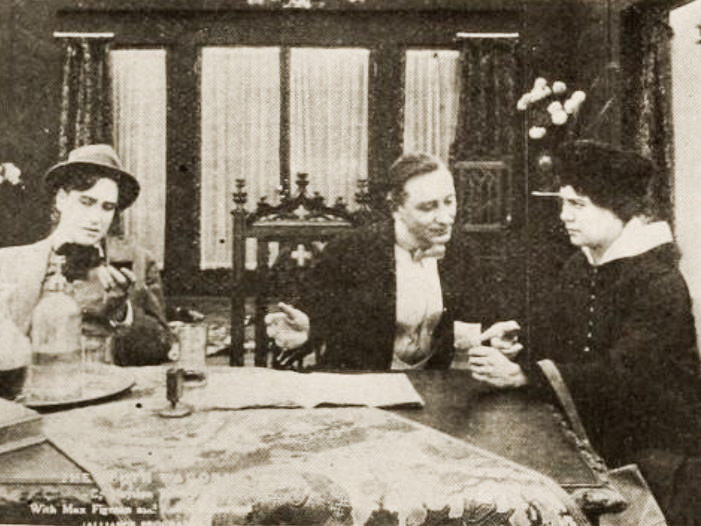
To fully appreciate The Truth Wagon, one must consider the cinematic climate of 1914. During this period, United States was undergoing significant artistic shifts, and Max Figman was at the forefront of this cult movement, often challenging established norms.
| Cinematography | Handheld |
| Soundtrack | Orchestral |
| Editing | Slow-Burn |
| Art Direction | Brutalist |
Visualizing the convergence of Max Figman's style and the core cult narrative.
The story opens with a ball at the residence of George Ross, Republican candidate for governor. When the activity of the evening is at its height the men are not to be found. The women become the victims of disagreeable lassitude. The ball is a failure. In the meantime the men are the guests of John Ross, the practical joker. They deserted the allurements of the ballroom to attend an amateur prizefight held on a barge, young Ross's newest idea. When John Ross returns home, "four sheets in the wind" and piloting Jim, the victor of the fight, his reception by his family is not what might be termed friendly. They are weary of his pranks and one after another deliver the broadside, "Why don't you tell the truth and go to work." George Ross, his father, is in no sense dishonest but is a pliant tool in the hands of Henry Drew, Republican State Chairman. Drew comes to an understanding with Francis Sullivan, the Democratic power in the state, to the effect that the Democratic votes will be cast for Ross and that in payment for this, political favors will be handed out to Sullivan. George Ross, however, is ignorant that he is being used as a tool. Neither will he believe his son, who tells him that he is being used as a plaything. Helen Dean, a reporter on "Truth," a fast-dying newspaper owned by William Dean, her father, seeks out John Ross to get a story concerning his newest joke. Like those of his family, she is impressed by his idleness and asks him why he does not tell the truth and go to work. He takes up a copy of "Truth" which she has laid upon the table and gets an idea. He learns that the newspaper is for sale and a moment later when his father takes him to task for his uselessness, he makes the startling announcement: "I'm going on the Truth Wagon for ninety days. I'm going to buy the 'Truth' and go to work." And he does. He buys the newspaper and begins to wage a bitter war against crooked politics. He refuses to sell out to Tammany and when his father will not cut loose from Drew and Sullivan, he begins to fight him. He retains Helen Dean and her father to aid him in his campaign and goes so far as to have the elder Dean nominated for the governorship to run against his father. Sullivan brings libel suits against young Ross and holds him practically a prisoner in his office. When these means fail and when John Ross succeeds in getting incriminating evidence against Sullivan and Drew, Sullivan gets his strong-arm-men together and instructs them to stop the "Truth" from going to press if they have to wreck the plant to do it. Young Ross appeals to the police for protection but they have already been "fixed" by the shrewd Sullivan. It is then that John Ross takes the law into his own hands. He finds Jim, his amateur prize-fighting friend. Jim gathers his henchmen together and they invade the Truth office, which is now in the hands of Sullivan's strong-arm men. A rough-and-tumble fight ensues between the two factions which results in the defeat of the Sullivan gang. In the meantime Forbes, a reporter on Truth, has sold out to the Star, Sullivan's newspaper, and has furnished them with a slanderous story regarding young Ross and Helen Dean. Sullivan considers this the blow which will defeat Ross. He offers to trade this story for the evidence held by Ross which will convict him. John Ross consents but he still holds the joker up his sleeve. He has summoned his father, George Ross, and showed him the evidence of Sullivan's and Drew's conspiracy against him. Thus enlightened the elder Ross resigns from the gubernatorial race in favor of William Dean and gives his son an exclusive story of his action. This is a body-blow to Sullivan and routs him completely. As a recompense for the loss of the money he has invested in the newspaper and the loss of the newspaper plant itself, John wins the hand of Helen Dean, now daughter of the governor-elect.
Decades after its release, The Truth Wagon remains a vital piece of the cinematic puzzle. Its influence can be seen in countless modern works, solidifying Max Figman's status as a master of the craft in United States and beyond.