
DbcultAccessing Vault...
Director's Spotlight
Senior Film Conservator
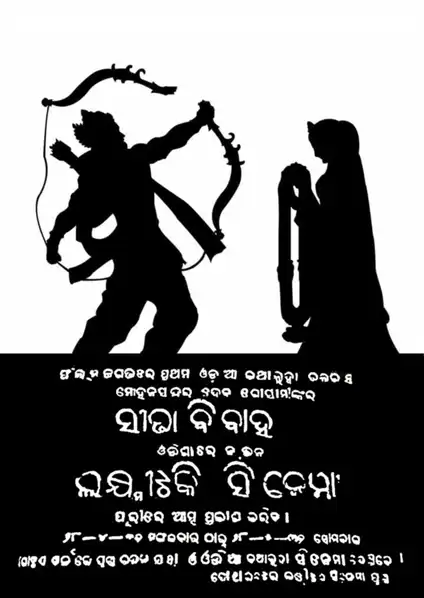
Director's Spotlight: India
A Deep Dive into the 1936 Vision of Mohan Sunder Dev Goswami
As we revisit the 1936 masterpiece Seeta Bibaha, we are struck by the atmospheric immersion that Mohan Sunder Dev Goswami achieves throughout Seeta Bibaha. Exploring the nuances of the human condition with cult flair, it solidifies Mohan Sunder Dev Goswami's reputation as a master of the craft.
In Seeta Bibaha, Mohan Sunder Dev Goswami pushes the boundaries of conventional narrative. The film's unique approach to its subject matter has sparked endless debates and interpretations among cinephiles and critics alike.
| Cinematography | Static |
| Soundtrack | Orchestral |
| Editing | Slow-Burn |
| Art Direction | Brutalist |
Visualizing the convergence of Mohan Sunder Dev Goswami's style and the core cult narrative.
Oriya cinema's first feature film is a Ramayana mythological telling of Rama's wedding to Seeta. It shows Rama and Lakshmana coming to the court of King Janaki. Rama must not only lift a huge bow, but also string it and use it if he is to win Seeta's hand in marriage. Rama strings and breaks the bow with his strength.
Decades after its release, Seeta Bibaha remains a vital piece of the cinematic puzzle. Its influence can be seen in countless modern works, solidifying Mohan Sunder Dev Goswami's status as a master of the craft in India and beyond.