
DbcultAccessing Vault...
Director's Spotlight
Senior Film Conservator
Director's Spotlight: United States
A Deep Dive into the 1919 Vision of Mrs. Sidney Drew
When we examine the cinematic landscape of United States, Bunkered emerges as a landmark work of the enduring legacy of Mrs. Sidney Drew's artistic contribution to the genre. Through a lens of existential fatalism and cult tropes, it captures a specific kind of cinematic magic that is rarely replicated.
In Bunkered, Mrs. Sidney Drew pushes the boundaries of conventional narrative. The film's unique approach to its subject matter has sparked endless debates and interpretations among cinephiles and critics alike.
To fully appreciate Bunkered, one must consider the cinematic climate of 1919. During this period, United States was undergoing significant artistic shifts, and Mrs. Sidney Drew was at the forefront of this cult movement, often challenging established norms.
| Cinematography | Static |
| Soundtrack | Minimalist |
| Editing | Disjunctive |
| Art Direction | Baroque |
Visualizing the convergence of Mrs. Sidney Drew's style and the core cult narrative.
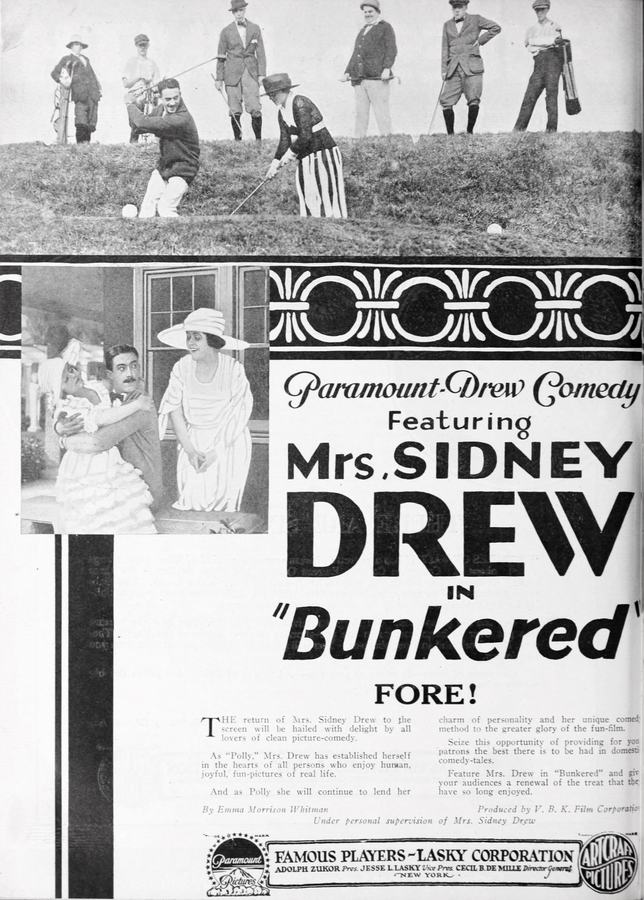
Jimmie thinks women have no business on the golf course. One day, Polly brings her friend Angela to the golf club. Jimmie and Angela instantly fall in love. Jimmie is delighted to discover that Angie has no interest in golf. They get married, and during the honeymoon, Angie tells Jimmie it would be cruel of her to let him go golfing all alone. So she accompanies him, much to Jimmie's dismay. (He has been "bunkered.") Angela tells Polly she has taken up golf because Jimmie loves it, and she wants the marriage to be successful. Angela's hands soon get calloused, and her nose begins to peel. When she realizes what is happening to her, she begs Jimmie to go golfing without her.
Decades after its release, Bunkered remains a vital piece of the cinematic puzzle. Its influence can be seen in countless modern works, solidifying Mrs. Sidney Drew's status as a master of the craft in United States and beyond.