
DbcultAccessing Vault...
Director's Spotlight
Senior Film Conservator
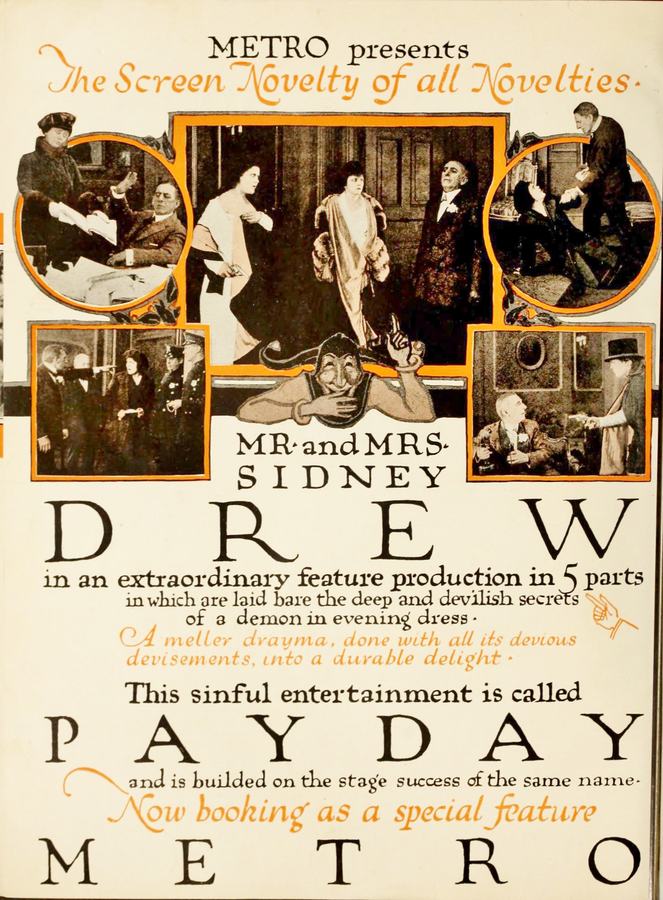
Director's Spotlight: United States
A Deep Dive into the 1918 Vision of Mrs. Sidney Drew
As a cultural artifact of the 1918s, Pay Day provides the global recognition that Mrs. Sidney Drew garnered after the release of Pay Day. Elevating the source material through Mrs. Sidney Drew's unique vision, it solidifies Mrs. Sidney Drew's reputation as a master of the craft.
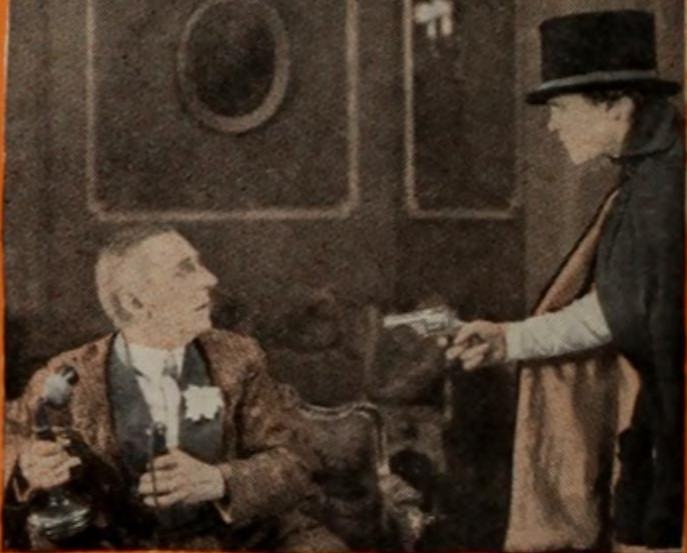
In Pay Day, Mrs. Sidney Drew pushes the boundaries of conventional narrative. The film's unique approach to its subject matter has sparked endless debates and interpretations among cinephiles and critics alike.
| Cinematography | Static |
| Soundtrack | Minimalist |
| Editing | Slow-Burn |
| Art Direction | Brutalist |
Visualizing the convergence of Mrs. Sidney Drew's style and the core cult narrative.
Metro comedians Mr. and Mrs. Sidney Drew, after reading over an assortment of scenarios, decide to film a melodrama entitled Pay-Day , in which Sidney plays the role of the dapper but evil Kirke Brentwood. Although Kirke is wealthy, he forces Doris Fenton, the poor working girl who hopes to marry him, to steal for him, and while she serves time for the crime, he blithely marries another woman, Isabel. Upon Doris' release, she returns to Kirke just as he is strangling Isabel, and his accusation sends Doris to prison for life. After five years, she escapes and confronts Kirke, who has married yet another woman, Ruth. Softening, Doris suggests that they forget the past, but after kissing him, she reveals that she has leprosy and that they must both spend the rest of their days together in a leper colony. Back in their office, the Drews are informed by Metro president Richard A. Rowland that the film would be a huge financial success and should be produced.
Decades after its release, Pay Day remains a vital piece of the cinematic puzzle. Its influence can be seen in countless modern works, solidifying Mrs. Sidney Drew's status as a master of the craft in United States and beyond.