
DbcultAccessing Vault...
Director's Spotlight
Senior Film Conservator
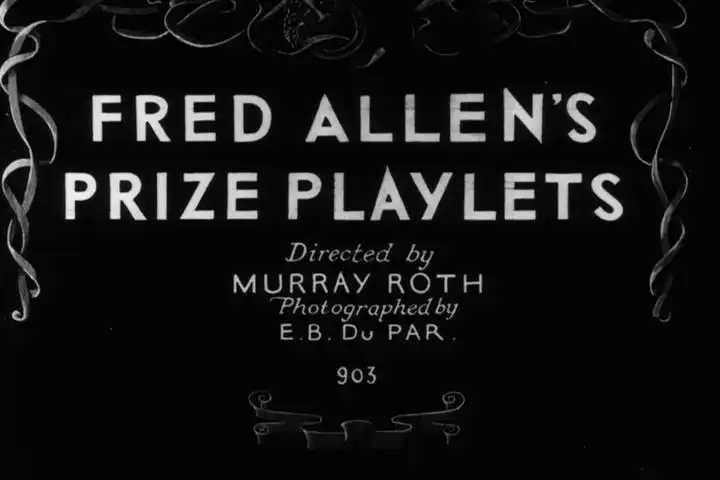
Director's Spotlight: United States
A Deep Dive into the 1929 Vision of Murray Roth
The brilliance of Fred Allen's Prize Playlets (1929) is inseparable from the visionary mind of its creator, Murray Roth. Serving as a mirror to the anxieties of a changing world, it persists as a haunting reminder of our own cinematic history.
In Fred Allen's Prize Playlets, Murray Roth pushes the boundaries of conventional narrative. The film's unique approach to its subject matter has sparked endless debates and interpretations among cinephiles and critics alike.
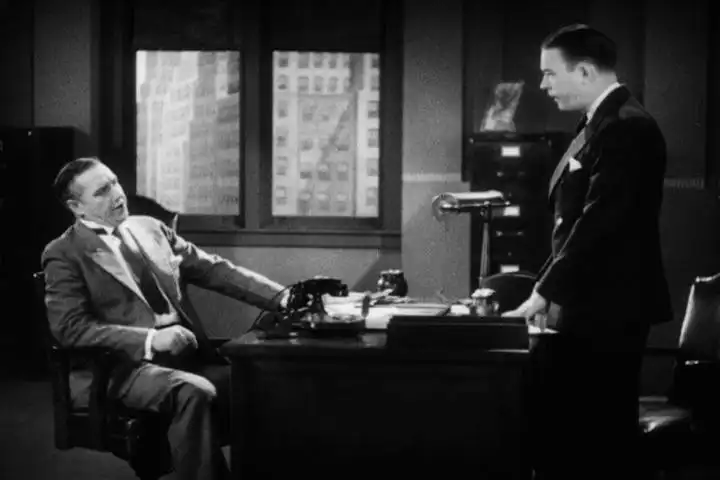
While deeply rooted in United States, Fred Allen's Prize Playlets has achieved a global reach, influencing directors from various backgrounds. Its ability to translate Comedy tropes into a universal cinematic language is why it remains a cult staple decades after its 1929 release.
| Cinematography | High-Contrast |
| Soundtrack | Minimalist |
| Editing | Disjunctive |
| Art Direction | Baroque |
Visualizing the convergence of Murray Roth's style and the core Comedy narrative.
Mr. Fiasco, a producer of plays gets three plays explained to him. In one of the plays, a man chooses scotch for a drink and dies. In the second play the man slaps his new wife in the face for nothing. The final play the man leaves his wife for work. The wife greets the iceman who knows the husband just left. He is greeted with open arms. The husband returns early and knows the iceman is under the table. After his wife gives him a lump of sugar, he smashes the iceman on the head with a lump of ice. Mr. Fiasco has the man thrown out.
Decades after its release, Fred Allen's Prize Playlets remains a vital piece of the cinematic puzzle. Its influence can be seen in countless modern works, solidifying Murray Roth's status as a master of the craft in United States and beyond.