
DbcultAccessing Vault...
Director's Spotlight
Senior Film Conservator
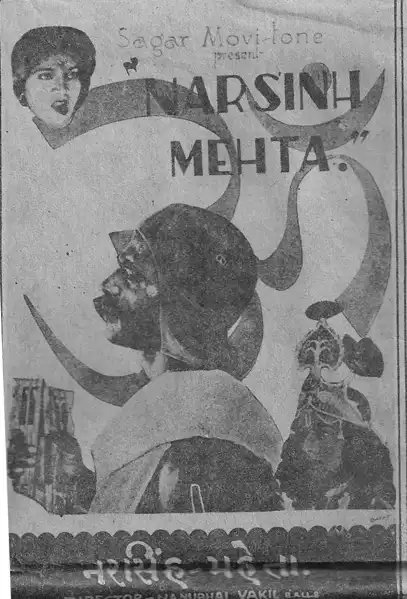
Director's Spotlight: India
A Deep Dive into the 1932 Vision of Nanubhai Vakil
Analyzing Narasinh Mehta (1932) requires a deep dive into the defining moment in cult history that Nanubhai Vakil helped create. Defining a new era of India artistic expression, it transcends regional boundaries to tell a universal story.
In Narasinh Mehta, Nanubhai Vakil pushes the boundaries of conventional narrative. The film's unique approach to its subject matter has sparked endless debates and interpretations among cinephiles and critics alike.
| Cinematography | Static |
| Soundtrack | Minimalist |
| Editing | Disjunctive |
| Art Direction | Baroque |
Visualizing the convergence of Nanubhai Vakil's style and the core cult narrative.
The first Gujarati feature film is a saint film about the life of Narasinh Mehta (1408-75), played by Master Manhar. Mehta is known for his evocative Prabhatiyan (morning hymns) and especially for his composition Vaishnava jana to ('The Vaishnav is he who knows the pain of others') made popular by Gandhi, who also adapted the poet's term Harijan (children of god) for the nation's Untouchables. The film adheres to the Gandhian interpretation of Narasinh Mehta's work, avoiding e.g. miracle scenes.
Decades after its release, Narasinh Mehta remains a vital piece of the cinematic puzzle. Its influence can be seen in countless modern works, solidifying Nanubhai Vakil's status as a master of the craft in India and beyond.