
DbcultAccessing Vault...
Director's Spotlight
Senior Film Conservator
Director's Spotlight: United States
A Deep Dive into the 1921 Vision of Norman L. Stevens
The evocative power of Johnny Ring and the Captain's Sword stems from the unique collaboration between the bold experimentation that has become synonymous with Norman L. Stevens. Framed by the hauntingly beautiful landscapes of the production, it echoes the profound changes occurring in United States during that era.
In Johnny Ring and the Captain's Sword, Norman L. Stevens pushes the boundaries of conventional narrative. The film's unique approach to its subject matter has sparked endless debates and interpretations among cinephiles and critics alike.
While deeply rooted in United States, Johnny Ring and the Captain's Sword has achieved a global reach, influencing directors from various backgrounds. Its ability to translate Drama tropes into a universal cinematic language is why it remains a cult staple decades after its 1921 release.
| Cinematography | Noir-Inspired |
| Soundtrack | Minimalist |
| Editing | Disjunctive |
| Art Direction | Baroque |
Visualizing the convergence of Norman L. Stevens's style and the core Drama narrative.
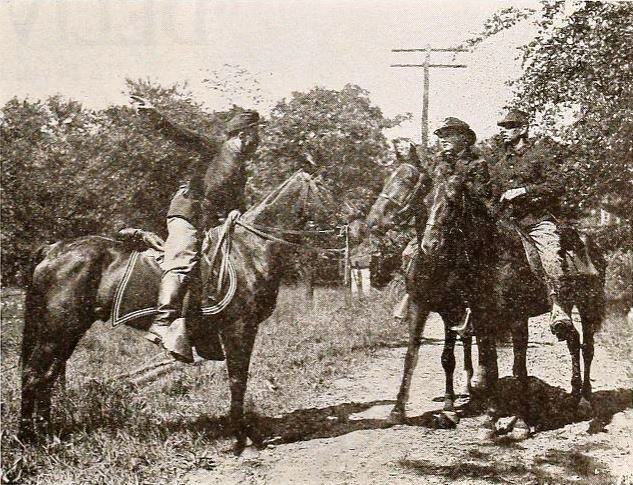
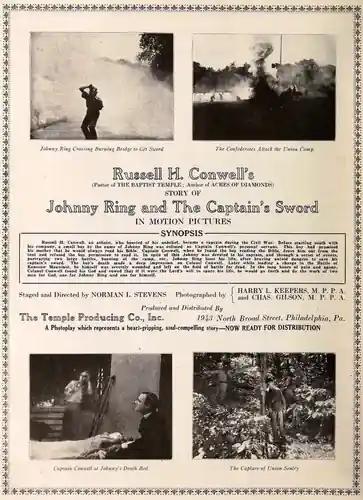
The fellow townsmen of Russell H. Conwell, an infantry captain of the Union Army during the Civil War, present him with a handsome sword, which becomes an object of special care to Johnny Ring, an earnest, Christian youth who is the captain's orderly. In camp, Conwell, an atheist, refuses to allow the boy to read the Bible; nevertheless, Johnny prays for the captain's conversion. During a surprise attack, Johnny, saving the sword, is wounded and dies. Conwell is promoted to colonel, and later he is wounded and left for dead in the Battle of Kennesaw Mountain. In the pain and agony of recovery, he vows that if God spares his life he will accomplish the work of two men--for Johnny Ring, and for himself. (The story is said to be based on the true experiences of a Philadelphia minister.)
Decades after its release, Johnny Ring and the Captain's Sword remains a vital piece of the cinematic puzzle. Its influence can be seen in countless modern works, solidifying Norman L. Stevens's status as a master of the craft in United States and beyond.