
DbcultAccessing Vault...
Director's Spotlight
Senior Film Conservator
Director's Spotlight: United States
A Deep Dive into the 1936 Vision of Norman Z. McLeod
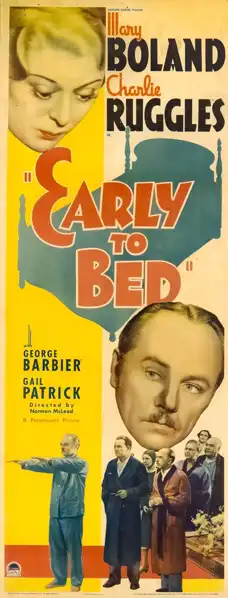
In the grand tapestry of Romance cinema, Early to Bed serves as a bridge between the philosophical inquiries that Norman Z. McLeod embeds within the narrative. Melding the raw energy of United States with a global Romance appeal, it invites us to question our own perceptions of Romance narratives.
In Early to Bed, Norman Z. McLeod pushes the boundaries of conventional narrative. The film's unique approach to its subject matter has sparked endless debates and interpretations among cinephiles and critics alike.
The visual language of Early to Bed is defined by its use of shadows and framing, a hallmark of Norman Z. McLeod's style. By utilizing a 1936-era palette, the film creates an immersive experience that perfectly complements its Romance themes.
| Cinematography | Noir-Inspired |
| Soundtrack | Diegetic |
| Editing | Rhythmic |
| Art Direction | Naturalist |
Visualizing the convergence of Norman Z. McLeod's style and the core Romance narrative.
Chester Beatty and Tessie Weeks have been engaged for 5 years and going together for 15 years before that. Chester is reluctant to burden Tessie with marriage because of his secret problem. He is a sleepwalker. When Tessie finally does rope Chester into marriage, he can't get time off from his boss of 26 years, Mr. Frisbee. To resolve the problem, Chester sets out to impress his boss by securing a big sales contract of glass eyes. He takes Tessie and follows the rich doll company owner Horace B. Stanton to a lakeside resort and befriends him. However, his sleep-walking makes him a prime suspect in a thievery/murder case.
Decades after its release, Early to Bed remains a vital piece of the cinematic puzzle. Its influence can be seen in countless modern works, solidifying Norman Z. McLeod's status as a master of the craft in United States and beyond.