
DbcultAccessing Vault...
Director's Spotlight
Senior Film Conservator
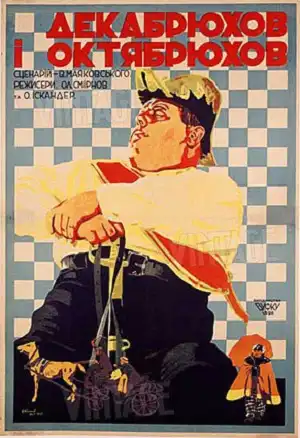
Director's Spotlight: Soviet Union
A Deep Dive into the 1928 Vision of O. Iskander
To understand the modern evolution of Soviet Union film, one must first look at Dekabryukhov i Oktyabryukhov and the collaborative alchemy between O. Iskander and the 1928 creative team. Subverting the expectations of the typical 1928 audience, it remains a vital reference point for anyone studying the evolution of O. Iskander.
In Dekabryukhov i Oktyabryukhov, O. Iskander pushes the boundaries of conventional narrative. The film's unique approach to its subject matter has sparked endless debates and interpretations among cinephiles and critics alike.
While deeply rooted in Soviet Union, Dekabryukhov i Oktyabryukhov has achieved a global reach, influencing directors from various backgrounds. Its ability to translate cult tropes into a universal cinematic language is why it remains a cult staple decades after its 1928 release.
| Cinematography | Deep Focus |
| Soundtrack | Orchestral |
| Editing | Invisible |
| Art Direction | Kitsch |
Visualizing the convergence of O. Iskander's style and the core cult narrative.
The bourgeois wedding of Dekabryukhova is interrupted by the machine-gun fire of revolution. He flees abroad, leaving his wife. Oktyabryukhov stays and adapts to the new life. At the end of the picture there is an attempt at universal reconciliation and the poet's tormenting theme "three-way love". Dekabryuhov returns to his homeland. His wife is already married to Oktyabryukhov. Having learned about it, Dekabryukhov tries to leave, but the newlyweds force him to stay. The film was shot by director O. Iskander, but the main creator, of course, was Mayakovsky.
Decades after its release, Dekabryukhov i Oktyabryukhov remains a vital piece of the cinematic puzzle. Its influence can be seen in countless modern works, solidifying O. Iskander's status as a master of the craft in Soviet Union and beyond.