
DbcultAccessing Vault...
Director's Spotlight
Senior Film Conservator
Director's Spotlight: United States
A Deep Dive into the 1920 Vision of Oliver D. Bailey
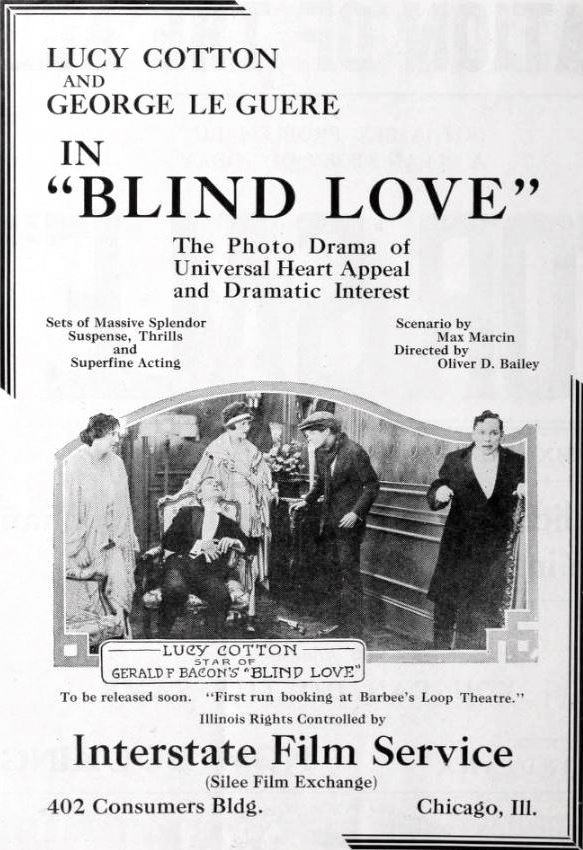
Deciphering the layers of Blind Love (1920) reveals a monumental shift in Drama filmmaking spearheaded by Oliver D. Bailey. With its avant-garde structure and atmospheric tension, offering layers of thematic complexity that demand repeated viewing.
In Blind Love, Oliver D. Bailey pushes the boundaries of conventional narrative. The film's unique approach to its subject matter has sparked endless debates and interpretations among cinephiles and critics alike.
| Cinematography | High-Contrast |
| Soundtrack | Experimental |
| Editing | Invisible |
| Art Direction | Kitsch |
Visualizing the convergence of Oliver D. Bailey's style and the core Drama narrative.
Josephine Burden, a young heiress vacationing at a summer resort, meets inveterate gambler Horace Beard at a casino. Horace becomes infatuated with Josephine, unaware that she is wealthy. Fellow lodger George Collins sees financial gain for himself in arranging an introduction for the two and convinces an inebriated Horace to sign a note promising Collins $50,000 if the introduction results in marriage. Horace and Josephine meet, fall in love and marry, but when Collins demands payment, Josephine overhears and repudiates her marriage. In an attempt to recover the damning agreement, Beard breaks into the Collins home, and a fight ensues. Collins finally confesses to his ploy and Josephine and Horace are reunited.
Decades after its release, Blind Love remains a vital piece of the cinematic puzzle. Its influence can be seen in countless modern works, solidifying Oliver D. Bailey's status as a master of the craft in United States and beyond.