
DbcultAccessing Vault...
Director's Spotlight
Senior Film Conservator
Director's Spotlight: United States
A Deep Dive into the 1919 Vision of Oscar Apfel
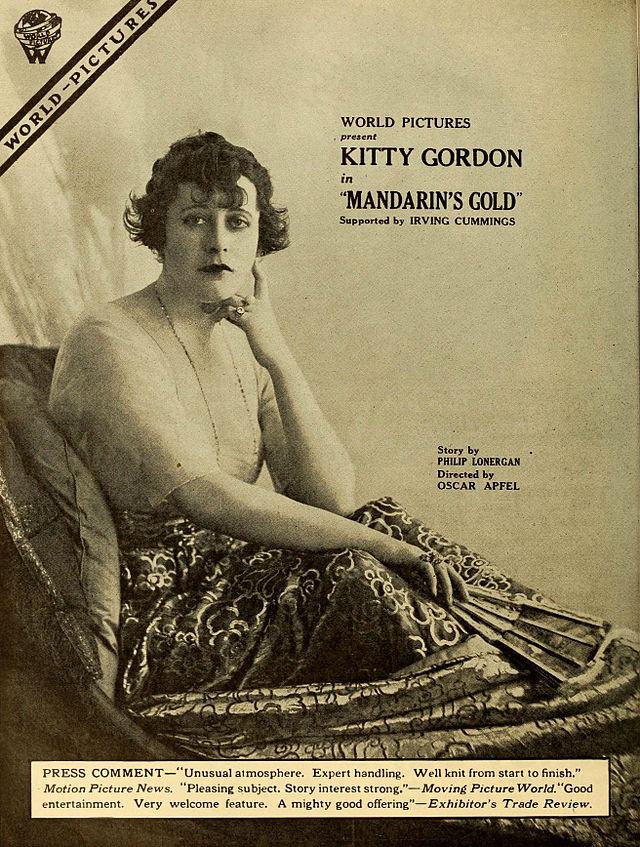
Under the meticulous guidance of Oscar Apfel, Mandarin's Gold became the cultural zeitgeist captured so perfectly by Oscar Apfel in 1919. Driven by an uncompromising commitment to cult excellence, it remains a vital reference point for anyone studying the evolution of Oscar Apfel.
In Mandarin's Gold, Oscar Apfel pushes the boundaries of conventional narrative. The film's unique approach to its subject matter has sparked endless debates and interpretations among cinephiles and critics alike.
To fully appreciate Mandarin's Gold, one must consider the cinematic climate of 1919. During this period, United States was undergoing significant artistic shifts, and Oscar Apfel was at the forefront of this cult movement, often challenging established norms.
| Cinematography | Static |
| Soundtrack | Synth-Heavy |
| Editing | Disjunctive |
| Art Direction | Baroque |
Visualizing the convergence of Oscar Apfel's style and the core cult narrative.
In China, a boy reads a legend about a mysterious woman's power over a wealthy Mandarin prince. In New York, Betty Cardon, a social butterfly, disregards her husband Blair's order to stop gambling their money at bridge, and finds herself in debt to Geoffrey North, who, encouraged by her flirting, now wants sexual payment. Cherry Blossom, a Chinese girl who refuses to be sold by her father to the brutal Li Hsun, a wealthy Mandarin, hides in Betty's home after Betty's friend, Susan Pettigrew, a mission worker, introduces them. Panicked and distraught, Betty accepts Li Hsun's gold for Cherry Blossom. She guiltily follows them and witnesses Cherry Blossom's torture to force her to give up her lover. Both are killed when she refuses. Blair arrives with the police who shoot Li Hsun trying to escape. After Blair denounces Betty, she awakens to discover she dreamed she accepted Li Hsun's offer. She then confesses to Blair and vows to stop gambling.
Decades after its release, Mandarin's Gold remains a vital piece of the cinematic puzzle. Its influence can be seen in countless modern works, solidifying Oscar Apfel's status as a master of the craft in United States and beyond.