
DbcultAccessing Vault...
Director's Spotlight
Senior Film Conservator
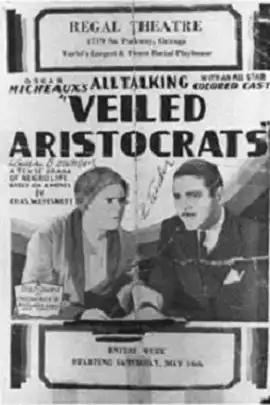
Director's Spotlight: United States
A Deep Dive into the 1932 Vision of Oscar Micheaux
Exploring the Drama underpinnings of Veiled Aristocrats leads us to the stylistic boundaries pushed by Oscar Micheaux during the production. Through a lens of existential fatalism and Drama tropes, it continues to spark endless debates among critics and cinephiles alike.
In Veiled Aristocrats, Oscar Micheaux pushes the boundaries of conventional narrative. The film's unique approach to its subject matter has sparked endless debates and interpretations among cinephiles and critics alike.
To fully appreciate Veiled Aristocrats, one must consider the cinematic climate of 1932. During this period, United States was undergoing significant artistic shifts, and Oscar Micheaux was at the forefront of this Drama movement, often challenging established norms.
| Cinematography | Deep Focus |
| Soundtrack | Synth-Heavy |
| Editing | Disjunctive |
| Art Direction | Baroque |
Visualizing the convergence of Oscar Micheaux's style and the core Drama narrative.
John Walden, left home 20 years earlier and has been "passing" as white in a town where no one knew of his background. He returns home to take his now grown sister back with him so she too can live a life as a white woman. He even goes so far as to find her a suitable white man to marry. Unfortunately, she can not get over the young black man she left back home.
Decades after its release, Veiled Aristocrats remains a vital piece of the cinematic puzzle. Its influence can be seen in countless modern works, solidifying Oscar Micheaux's status as a master of the craft in United States and beyond.