
DbcultAccessing Vault...
Director's Spotlight
Senior Film Conservator
Director's Spotlight: United States
A Deep Dive into the 1917 Vision of Otis Turner
Exploring the cult underpinnings of To Honor and Obey leads us to the stylistic boundaries pushed by Otis Turner during the production. Through a lens of existential fatalism and cult tropes, it continues to spark endless debates among critics and cinephiles alike.
In To Honor and Obey, Otis Turner pushes the boundaries of conventional narrative. The film's unique approach to its subject matter has sparked endless debates and interpretations among cinephiles and critics alike.

In this work, Otis Turner explores the intersection of cult and United States cultural identity. The meticulous attention to detail suggests a deep-seated commitment to pushing the boundaries of the medium, ensuring that To Honor and Obey remains a relevant topic of study for cult enthusiasts.
| Cinematography | Deep Focus |
| Soundtrack | Minimalist |
| Editing | Disjunctive |
| Art Direction | Baroque |
Visualizing the convergence of Otis Turner's style and the core cult narrative.
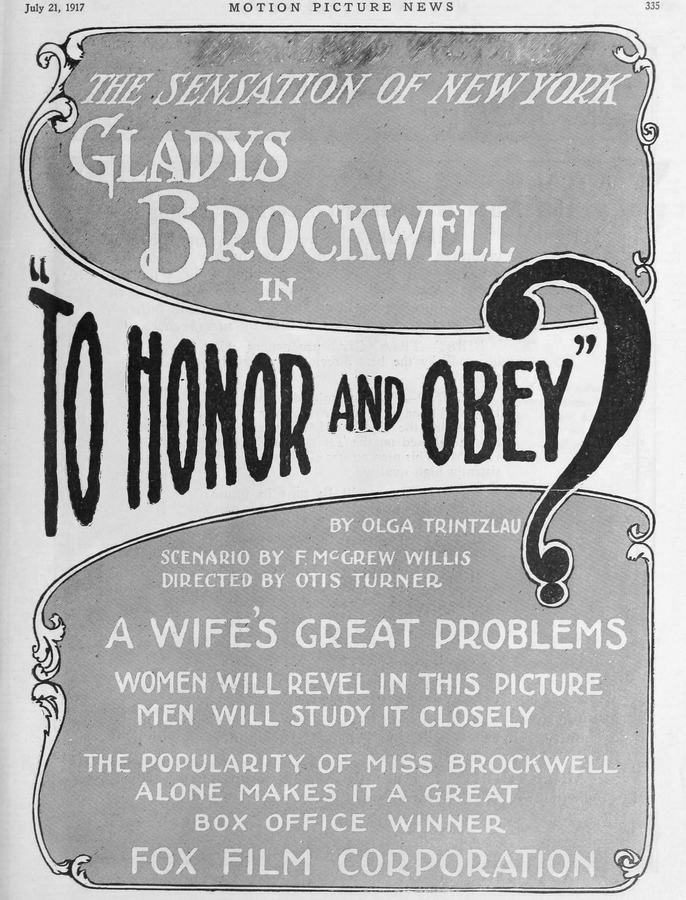
Lorrie Hollis marries flamboyant Richard Hallam. When Hallam soon loses his fortune in stock-market speculation, he appeals to Lorrie to beseech her former suitor, wealthy broker Marc Patton, for help, and she does, sacrificing her virtue for her husband's wealth. His money regained, he forgets the great sacrifice that his wife made for him and neglects her for the companionship of Rose Delvane, finally driving Lorrie from the house with his abuse. Seething from Hallam's unjust treatment of Lorrie, Patton crushes his rival in a stock battle. His fortune again lost, Hallam is deserted by Rose. Bereft of money, respect, and love, he kills himself, thus freeing Lorrie to begin a new life with Patton.
Decades after its release, To Honor and Obey remains a vital piece of the cinematic puzzle. Its influence can be seen in countless modern works, solidifying Otis Turner's status as a master of the craft in United States and beyond.