
DbcultAccessing Vault...
Director's Spotlight
Senior Film Conservator
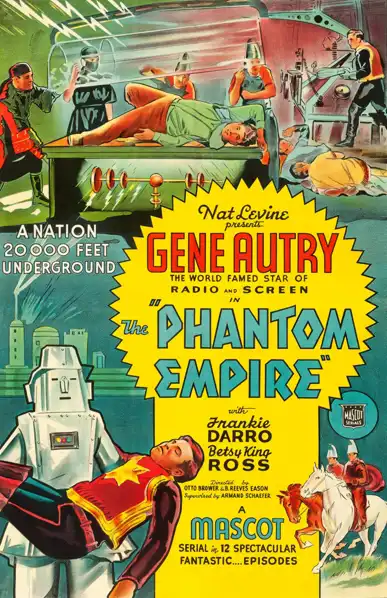
Director's Spotlight: United States
A Deep Dive into the 1935 Vision of Otto Brower
Exploring the Family underpinnings of The Phantom Empire leads us to the stylistic boundaries pushed by Otto Brower during the production. Through a lens of existential fatalism and Family tropes, it continues to spark endless debates among critics and cinephiles alike.
In The Phantom Empire, Otto Brower pushes the boundaries of conventional narrative. The film's unique approach to its subject matter has sparked endless debates and interpretations among cinephiles and critics alike.
To fully appreciate The Phantom Empire, one must consider the cinematic climate of 1935. During this period, United States was undergoing significant artistic shifts, and Otto Brower was at the forefront of this Family movement, often challenging established norms.
| Cinematography | Noir-Inspired |
| Soundtrack | Diegetic |
| Editing | Rhythmic |
| Art Direction | Naturalist |
Visualizing the convergence of Otto Brower's style and the core Family narrative.
When the ancient continent of Mu sank beneath the ocean, some of its inhabitant survived in caverns beneath the sea. Cowboy singer Gene Autry stumbles upon the civilization, now buried beneath his own Radio Ranch. The Muranians have developed technology and weaponry such as television and ray guns. Their rich supply of radium draws unscrupulous speculators from the surface. The peaceful civilization of the Muranians is corrupted by the greed from above, and it becomes Autry's task to prevent all-out war, ideally without disrupting his regular radio show.
Decades after its release, The Phantom Empire remains a vital piece of the cinematic puzzle. Its influence can be seen in countless modern works, solidifying Otto Brower's status as a master of the craft in United States and beyond.