
DbcultAccessing Vault...
Director's Spotlight
Senior Film Conservator
Director's Spotlight: Canada
A Deep Dive into the 1924 Vision of Paul Cazeneuve
Under the meticulous guidance of Paul Cazeneuve, Why Get Married? became the complex thematic architecture established by Paul Cazeneuve. Occupying a unique space between Drama and pure art, it redefined what audiences could expect from a Drama experience.
In Why Get Married?, Paul Cazeneuve pushes the boundaries of conventional narrative. The film's unique approach to its subject matter has sparked endless debates and interpretations among cinephiles and critics alike.
To fully appreciate Why Get Married?, one must consider the cinematic climate of 1924. During this period, Canada was undergoing significant artistic shifts, and Paul Cazeneuve was at the forefront of this Drama movement, often challenging established norms.
| Cinematography | Deep Focus |
| Soundtrack | Minimalist |
| Editing | Slow-Burn |
| Art Direction | Brutalist |
Visualizing the convergence of Paul Cazeneuve's style and the core Drama narrative.
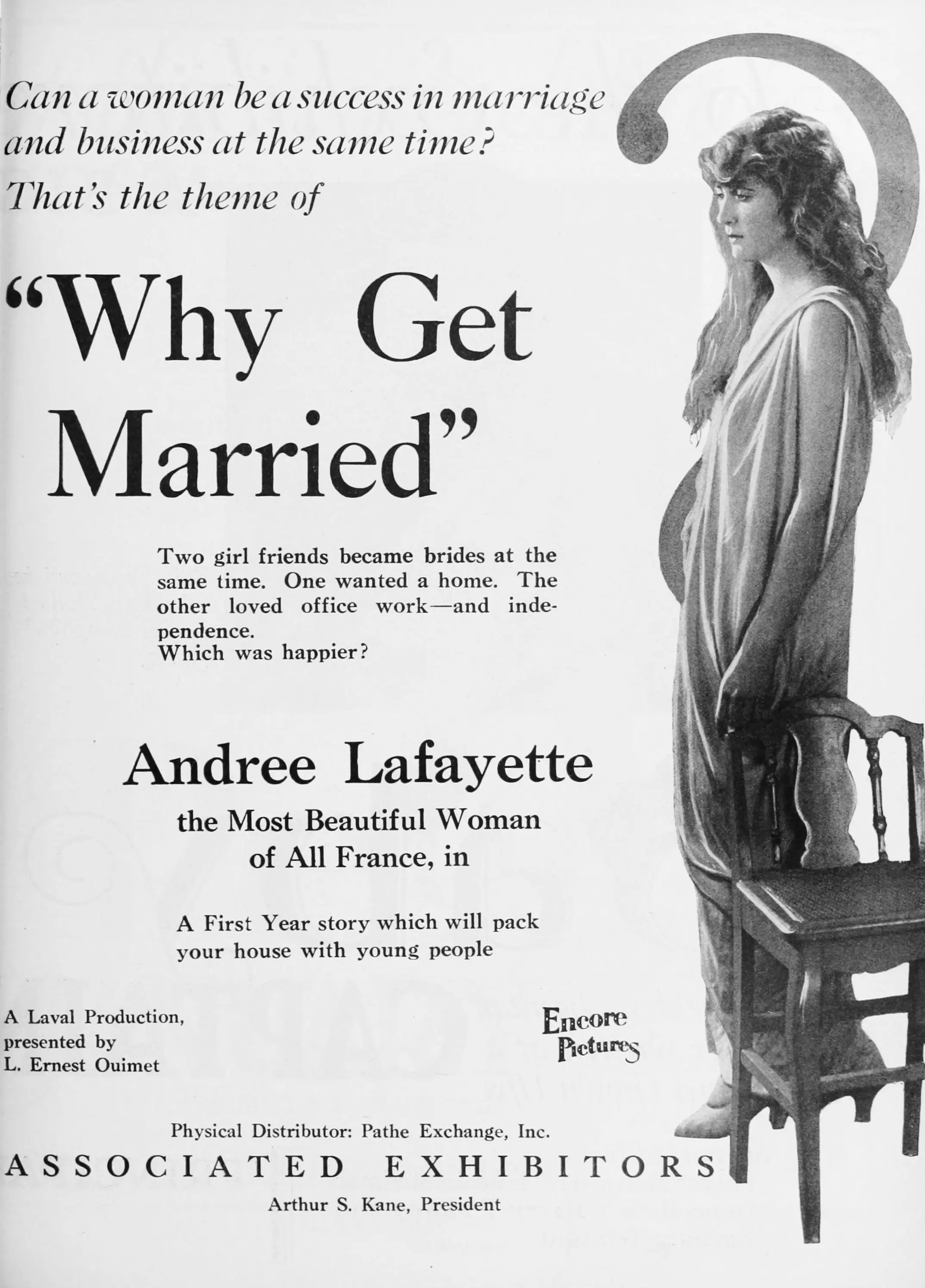
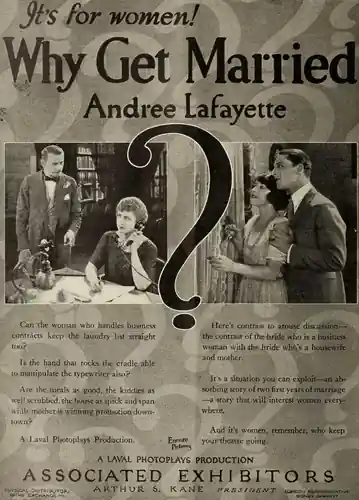
While Janet Carroll decides to give up her job when she marries, her friend, Marcia Wainwright has continued to pursue her career after marrying Jack Wainwright. Some time later, at around the same time that Janet's husband receives a promotion, Jack is reduced to taking a job as a railway freight-man after he loses his former position. Marcia and Jack become increasingly estranged, especially after Marcia rejects the advances of Rodney Stone, the son of her employer, who then writes anonymous letters to Jack and Janet claiming that their respective spouses have been having an affair. When Jack learns the truth, he thrashes Rodney and reconciles with Marcia, who decides to quit her job and remain a housewife.
Decades after its release, Why Get Married? remains a vital piece of the cinematic puzzle. Its influence can be seen in countless modern works, solidifying Paul Cazeneuve's status as a master of the craft in Canada and beyond.