
DbcultAccessing Vault...
Director's Spotlight
Senior Film Conservator
Director's Spotlight: Sweden
A Deep Dive into the 1912 Vision of Paul Garbagni
In the storied career of Paul Garbagni, The Springtime of Life stands as a the provocative questions that Paul Garbagni poses to the Sweden audience. Elevating the source material through Paul Garbagni's unique vision, it persists as a haunting reminder of our own cinematic history.
In The Springtime of Life, Paul Garbagni pushes the boundaries of conventional narrative. The film's unique approach to its subject matter has sparked endless debates and interpretations among cinephiles and critics alike.
While deeply rooted in Sweden, The Springtime of Life has achieved a global reach, influencing directors from various backgrounds. Its ability to translate cult tropes into a universal cinematic language is why it remains a cult staple decades after its 1912 release.
| Cinematography | Deep Focus |
| Soundtrack | Diegetic |
| Editing | Elliptical |
| Art Direction | Expressionist |
Visualizing the convergence of Paul Garbagni's style and the core cult narrative.
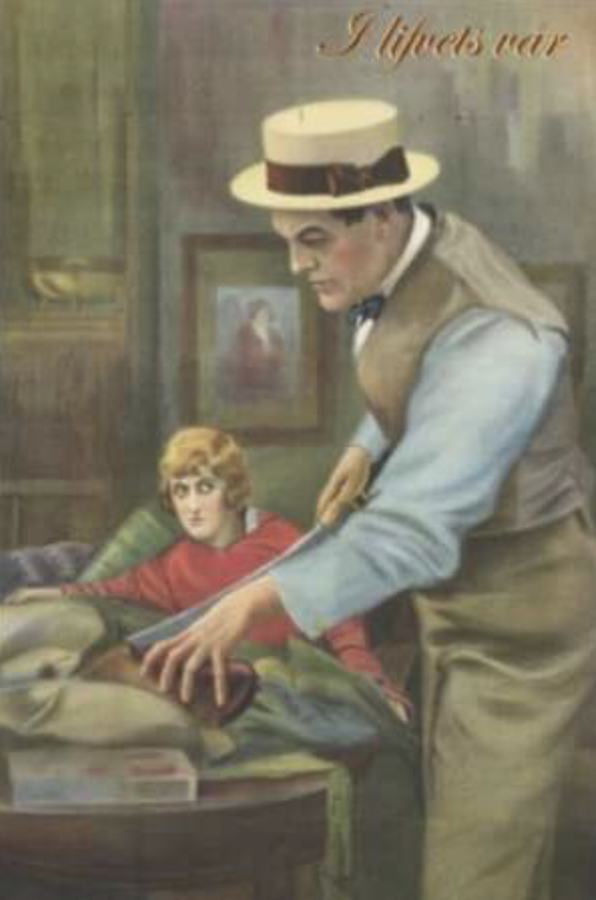
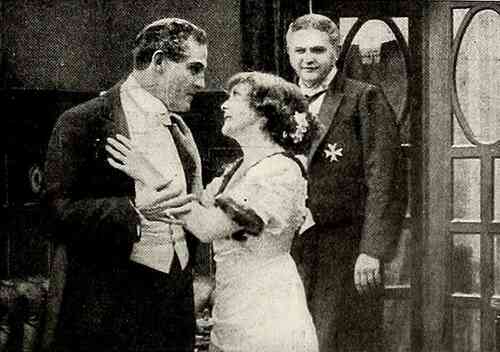
Little Gerta, when her mother dies. is brought to her father, Carl Von Seydling, a government official, who deserted his wife and child a few years before. Councilor Van Seydling found the child's presence in his household to be cumbersome and for that reason turned her over to one Sarah Anderson, a nurse. Although Van Seydling did not know it, the Anderson woman was a notorious fagin. She promptly sold Gerta to a beggar, who taught her to beg and to steal. One of her begging trips brings Gerta to the attention of a young man named Alm Stoddard, He becomes interested in the pretty child and upon learning her story is horrified. The police are notified. They arrest her supposed father, but Sarah Anderson escapes. Little Gerta is adopted by Alm's mother and grows to be a beautiful young woman. Alm falls in love with her, but Gerta has lost her heart to the dashing Lieutenant Wiles. Through Alm's efforts the character of this man is shown to Gerta, and thus she is warned in time. Lieutenant Wiles challenges Alm to a duel and in the encounter Alm is wounded slightly. Gerta, frightened by the trouble she has caused, disappears, leaving a note begging the Stoddards to forgive her seeming ingratitude. Some years later a grand opera star, Mlle. Hauser, has taken the public by storm. Among her admirers is Alm Stoddard, although he is too fainthearted to write to her or tell her that he knows her to be little Gerta. She, from behind the footlights, has recognized him but, fearing he has not forgiven her, makes no sign of recognition. Another man, in constant attendance at the opera, is Councilor Van Seydling, who has long since believed his daughter dead. By a strange coincidence Sarah Anderson is employed as Gerta's maid. She has not reformed any and when she steals Mlle, Hauser's handbag she extracts a picture of a very little girl. Looking at the picture Sarah suddenly realizes that Mlle. Hauser is none other than little Gerta. That evening the audience is assembled when a fire breaks out. In the panic that follows Alm is the only one who remembers Gerta. At the risk of his life he brings the unconscious girl out of danger. At the corner drug store Sarah Anderson, mortally injured, is dying. She bares the story of her life and among the listeners is Councilor Von Seydling. The memory of his misdeeds strikes terror to his heart. Van Seydling hurries out and, finding his daughter in the arms of Alm, begs her to forgive him. The girl is mystified, but a little explaining clears the situation. Following custom, Alm asks her father for her hand. Von Seydling asks Gerta to decide and she, clinging to Alm, smiles her contentment.
Decades after its release, The Springtime of Life remains a vital piece of the cinematic puzzle. Its influence can be seen in countless modern works, solidifying Paul Garbagni's status as a master of the craft in Sweden and beyond.