
DbcultAccessing Vault...
Director's Spotlight
Senior Film Conservator
Director's Spotlight: United States
A Deep Dive into the 1921 Vision of Paul Hurst
The artistic breakthrough represented by Shadows of the West in 1921 highlights the uncompromising vision of Paul Hurst that defines this Drama masterpiece. In the context of United States's rich cinematic history, it captures a specific kind of cinematic magic that is rarely replicated.
In Shadows of the West, Paul Hurst pushes the boundaries of conventional narrative. The film's unique approach to its subject matter has sparked endless debates and interpretations among cinephiles and critics alike.
While deeply rooted in United States, Shadows of the West has achieved a global reach, influencing directors from various backgrounds. Its ability to translate Drama tropes into a universal cinematic language is why it remains a cult staple decades after its 1921 release.
| Cinematography | Static |
| Soundtrack | Diegetic |
| Editing | Rhythmic |
| Art Direction | Naturalist |
Visualizing the convergence of Paul Hurst's style and the core Drama narrative.
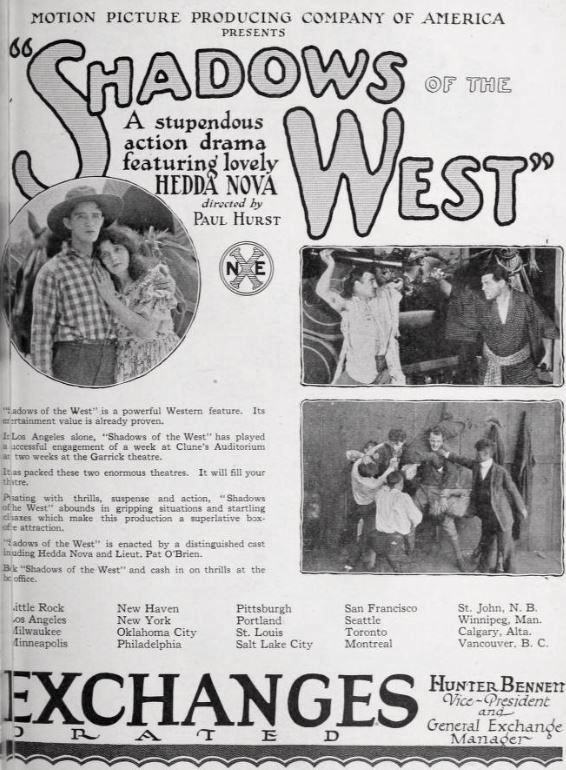
California cowpuncher Jim Kern and his pal enlist in the war against Germany and soon meet Frank Akuri, who has pledged to colonize the United States for his homeland, Japan. While Jim and other white males are fighting in France, Akuri forces Jim's sweetheart Mary to sell her ranch, as she is not able to run it because the only men left, the Japanese, have pledged not to work for the whites. With the ranch, Akuri begins his colony. Mary counters by organizing her society-lady friends to appeal to Congress against the "yellow menace." When it seems that his plans will be thwarted, Akuri issues orders for the deaths of Mary and her friends, but Jim and his pal return and rescue them. Akuri kidnaps Mary and takes her to his apartment, but with the help of Akuri's wronged Japanese lover, Jim learns her whereabouts. He organizes a posse of American Legion locals and rescues Mary just as Akuri is about to murder her. Akuri's group is routed out.
Decades after its release, Shadows of the West remains a vital piece of the cinematic puzzle. Its influence can be seen in countless modern works, solidifying Paul Hurst's status as a master of the craft in United States and beyond.