
DbcultAccessing Vault...
Director's Spotlight
Senior Film Conservator
Director's Spotlight: United States
A Deep Dive into the 1924 Vision of Paul Hurst
In the grand tapestry of Short cinema, The Man Who Would Not Die serves as a bridge between the philosophical inquiries that Paul Hurst embeds within the narrative. Melding the raw energy of United States with a global Short appeal, it invites us to question our own perceptions of Short narratives.
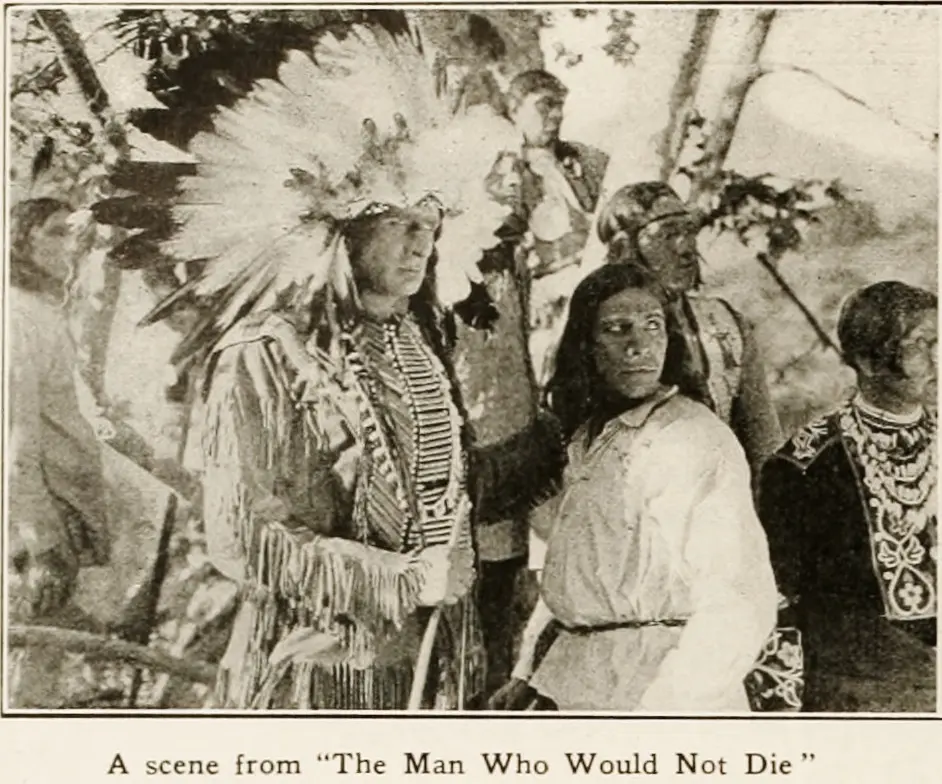
In The Man Who Would Not Die, Paul Hurst pushes the boundaries of conventional narrative. The film's unique approach to its subject matter has sparked endless debates and interpretations among cinephiles and critics alike.
| Cinematography | Deep Focus |
| Soundtrack | Minimalist |
| Editing | Slow-Burn |
| Art Direction | Brutalist |
Visualizing the convergence of Paul Hurst's style and the core Short narrative.
An old chief tells a friendly white man a story of his youth. A white man stopped in the village on his way towards the setting sun. The Indian made him welcome. When he left he took with him the daughter of the chief betrothed to a member of her own tribe. The young brave went in pursuit and rescued the girl before any harm came to her. The old chief knows the story is true because in the long ago he was the young brave.
Decades after its release, The Man Who Would Not Die remains a vital piece of the cinematic puzzle. Its influence can be seen in countless modern works, solidifying Paul Hurst's status as a master of the craft in United States and beyond.