
DbcultAccessing Vault...
Director's Spotlight
Senior Film Conservator
Director's Spotlight: United States
A Deep Dive into the 1933 Vision of Paul Sloane
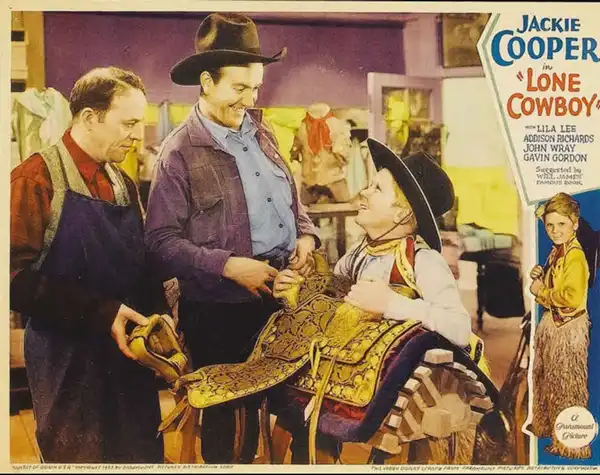
As a cultural artifact of the 1933s, Lone Cowboy provides the visionary mind of its creator, Paul Sloane. With its avant-garde structure and atmospheric tension, it redefined what audiences could expect from a Drama experience.
In Lone Cowboy, Paul Sloane pushes the boundaries of conventional narrative. The film's unique approach to its subject matter has sparked endless debates and interpretations among cinephiles and critics alike.
In this work, Paul Sloane explores the intersection of Drama and United States cultural identity. The meticulous attention to detail suggests a deep-seated commitment to pushing the boundaries of the medium, ensuring that Lone Cowboy remains a relevant topic of study for Drama enthusiasts.
| Cinematography | Handheld |
| Soundtrack | Minimalist |
| Editing | Disjunctive |
| Art Direction | Baroque |
Visualizing the convergence of Paul Sloane's style and the core Drama narrative.
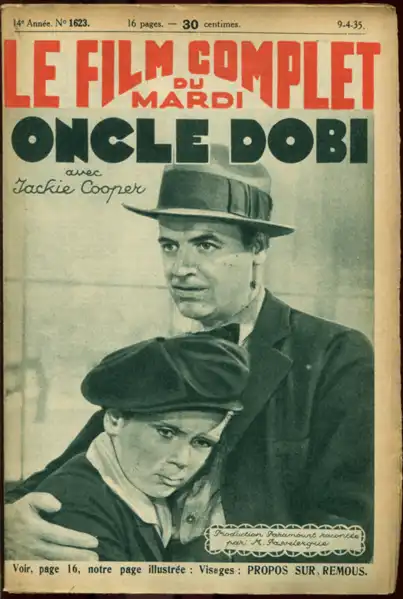
"Scooter" O'Neal is a young Chicago boy brought up in the slums by his idolized father, and "Scooter" dreams of being a cowboy out in the Wild West, where his father was once a rancher. He is overjoyed when he learns that he is being sent to Nevada to visit his dad's old friend, "Dobe" Jones. What he doesn't know is that his out-of-work father is about to be arrested for theft and is sending him away so he won't be there for the upcoming disgrace. "Scooter" expects to be greeted by "Dobe" and his wife, Eleanor, but is met only by "Dobe" and isn't responsive to "Scooter's" questions about his missing wife. "Dobe" has problems of his own and is about to send Scooter back to Chicago, when he gets a telegram informing him that Bill O'Neal has committed suicide. Knowing that Scooter will be put in an orphanage, he decides to keep the kid with him. After several nights of camping out, "Scooter" can't understand why they never reach "Dobe's" ranch, until two cowhands tell him that "Dobe" is a restless and relentless man always on the search for his wife and the man, Jim Weston, with whom she ran away. "Dobe" learns where the pair are hiding but "Scooter" gets to town first and warns them. "Dobe", robbed of his chance for vengeance, takes it out on "Scooter" and blurts out the truth about his father's death. Then, touched by pity and "Scooter's" grief, "Dobe" decides to enter a rodeo to earn enough money to buy Scooter a silver-mounted saddle. But, in the bull-dogging event, "Dobe" spots Eleanor and Jim in the grandstand, and this diverts his attention-to-business-at-hand enough that he ends up getting gored by the steer he was trying to dog. While recovering, he learns the whereabouts of his cheating wife and her new best-friend, but also realizes that the future of "Scooter" means more to him than his quest for vengeance. He rides forth to tell them all-is-forgiven but Scooter thinks he has other intentions and follows him. "Dobe" confronts Eleanor and Jim but, Jim, fearing it is a ruse, pulls a gun. Shots ring out, "Dobe" kills Jim but a stray bullet hits "Scooter." Eleanor goes for the Marshal, while "Dobe", carrying Scooter, races furiously to the doctor's office.
Decades after its release, Lone Cowboy remains a vital piece of the cinematic puzzle. Its influence can be seen in countless modern works, solidifying Paul Sloane's status as a master of the craft in United States and beyond.