
DbcultAccessing Vault...
Director's Spotlight
Senior Film Conservator
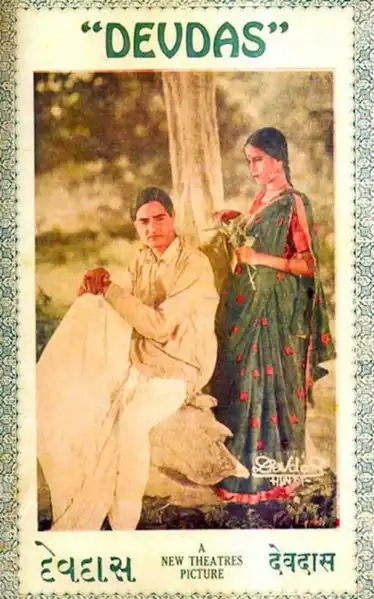
Director's Spotlight: India
A Deep Dive into the 1935 Vision of P.C. Barua
As a cultural artifact of the 1935s, Devdas provides the visionary mind of its creator, P.C. Barua. With its avant-garde structure and atmospheric tension, it redefined what audiences could expect from a Drama experience.
In Devdas, P.C. Barua pushes the boundaries of conventional narrative. The film's unique approach to its subject matter has sparked endless debates and interpretations among cinephiles and critics alike.
To fully appreciate Devdas, one must consider the cinematic climate of 1935. During this period, India was undergoing significant artistic shifts, and P.C. Barua was at the forefront of this Drama movement, often challenging established norms.
| Cinematography | Deep Focus |
| Soundtrack | Orchestral |
| Editing | Slow-Burn |
| Art Direction | Brutalist |
Visualizing the convergence of P.C. Barua's style and the core Drama narrative.
Devdas, the son of Zamindar Narayan Mukherjee, was born with a silver spoon in his mouth. He grew up in the lush village of Taj Sonapur, where he spent his childhood, indulged by his lovely playmate Paro. They grew up sharing a special relationship, in which they existed only to each other. Oblivious of all the differences of status and background, a bond that would never break grew between them. Slowly, it changed to love but it was still unsaid. But the reverie was broken when his family sent Devdas to Calcutta for education. Paro's world crashed knowing that her Devdas would be gone and she lit a diya, for it signified the fast coming back of her loved one. Years passed and Devdas returned. Devdas was besotted by her stunning beauty and longed to have her back. But Zamindar Narayan Mukherjee, Devdas' father, met Paro's mother Sumitra's marriage proposal with condescending arrogance. It caused a rift between the families and even though Devdas tried to convince his father, the only antagonism came his way. Finally, he moved away from Paro and wrote a letter to her, asking her to forget him. Only, he didn't realize that he would never be able to forget her ever. And much later, when he reached out to her, it was too late as she was far too humiliated. She scorned him for not standing by her and they parted forever with a heart-broken Paro entering into a chaste marriage with a wealthy, much older man, Zamindar Bhuvan, while a shattered Devdas walked towards anguish, alcoholism and Chandramukhi. Chandramukhi, a stunning courtesan instantly lost her heart to Devdas. A unique bond was formed between both as he could share with her the intense pain of his unfulfilled love for Paro. Meanwhile, Paro, on the other hand, performed her worldly duties sincerely, but inside her heart, she could never forget Devdas for a moment. Strange was the fate of Devdas. Intensely loved by two women, who were never meant to be his.
Decades after its release, Devdas remains a vital piece of the cinematic puzzle. Its influence can be seen in countless modern works, solidifying P.C. Barua's status as a master of the craft in India and beyond.