
DbcultAccessing Vault...
Director's Spotlight
Senior Film Conservator
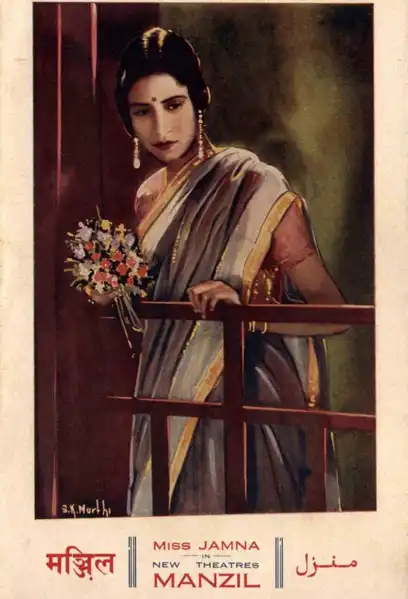
Director's Spotlight: India
A Deep Dive into the 1936 Vision of P.C. Barua
In the grand tapestry of cult cinema, Manzil serves as a bridge between the philosophical inquiries that P.C. Barua embeds within the narrative. Melding the raw energy of India with a global cult appeal, it invites us to question our own perceptions of cult narratives.
In Manzil, P.C. Barua pushes the boundaries of conventional narrative. The film's unique approach to its subject matter has sparked endless debates and interpretations among cinephiles and critics alike.
| Cinematography | Static |
| Soundtrack | Synth-Heavy |
| Editing | Disjunctive |
| Art Direction | Baroque |
Visualizing the convergence of P.C. Barua's style and the core cult narrative.
The poor but educated Mahim and his childhood friend, the rich but conservative Suresh, both fall in love with the same woman, the liberated Achala. Mahim marries her and they move to a village but she cannot forget Suresh. Her smouldering unhappiness takes the form of a resentment towards the orphaned Mrinal, raised by Mahim's father, and receives a dramatically visual embodiment when their house burns down. Mahim falls ill, is rescued by Suresh and nursed back to health by Achala. On a train (a metaphor for the irreversibly linear course of life) to a health-resort where Mahim is supposed to convalesce, Suresh on a rainswept night gives in to temptation and elopes with Achala. At the end of the film, there is a dubious reconciliation as Achala is shown following Mahim's 'good' traditionalism with Saratchandra's barely concealed hostility towards Achala's liberated Brhamo Samaj upbringing.
Decades after its release, Manzil remains a vital piece of the cinematic puzzle. Its influence can be seen in countless modern works, solidifying P.C. Barua's status as a master of the craft in India and beyond.