
DbcultAccessing Vault...
Director's Spotlight
Senior Film Conservator
Director's Spotlight: United States
A Deep Dive into the 1915 Vision of Percy Winter
In the grand tapestry of cult cinema, The Other Girl serves as a bridge between the bold experimentation that has become synonymous with Percy Winter. Breaking the traditional rules of cult engagement, it highlights the importance of independent voices in United States.
In The Other Girl, Percy Winter pushes the boundaries of conventional narrative. The film's unique approach to its subject matter has sparked endless debates and interpretations among cinephiles and critics alike.
To fully appreciate The Other Girl, one must consider the cinematic climate of 1915. During this period, United States was undergoing significant artistic shifts, and Percy Winter was at the forefront of this cult movement, often challenging established norms.
| Cinematography | High-Contrast |
| Soundtrack | Diegetic |
| Editing | Rhythmic |
| Art Direction | Naturalist |
Visualizing the convergence of Percy Winter's style and the core cult narrative.
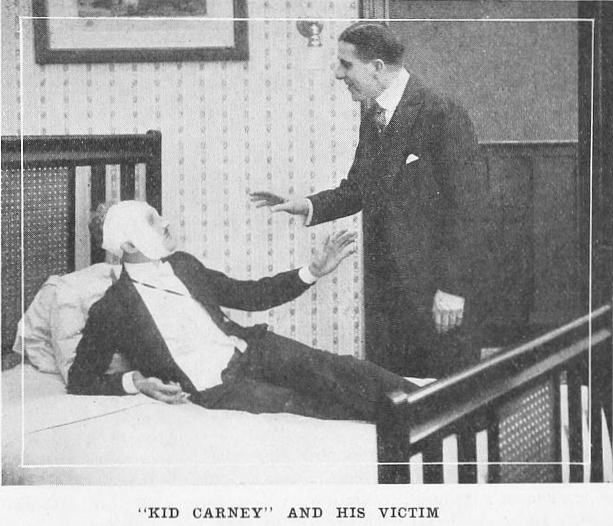
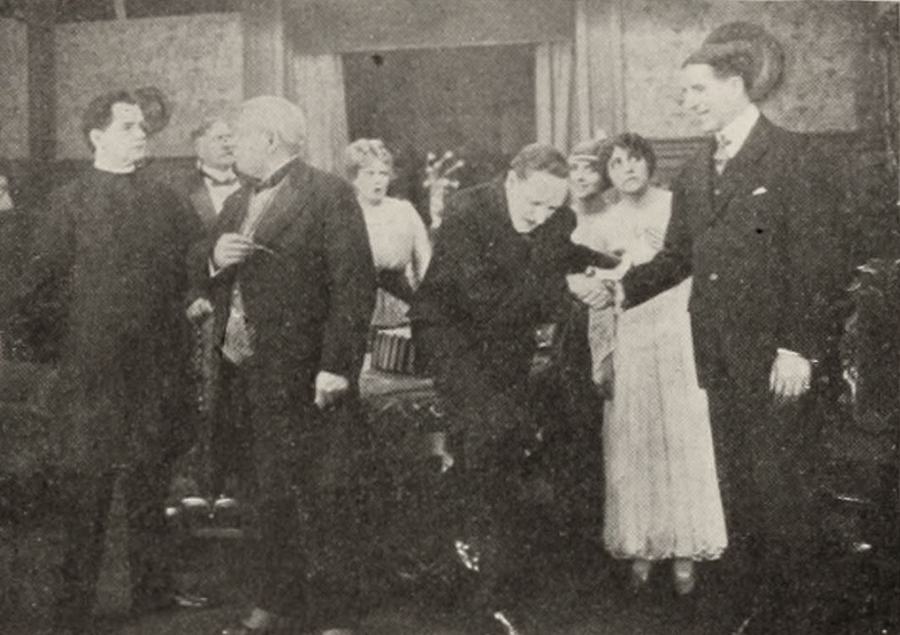
Rev. Bradford seeks the health resort conducted by William Muldoon. "Kid Garvey," who has known Mr. Muldoon for many years, calls on his old friend. Rev. Bradford arrives and he chooses the "Kid" as his trainer, believing him to be one of the regular trainers of the institution. Garvey seeks an opportunity of breaking into "swell society" and requests that he be introduced by his right name, Frank Sheldon. Besides Rev. Bradford, Mr. Thaddeus Fullon, his daughter Catherine and her chum Estelle are stopping with the Watermans and friends of the minister. The minister and the Kid are boxing on the front lawn. The children of the neighborhood learn of this and peek over the hedge at the combatants. There is one, however, the cook, who does not think that this is quite the proper conduct of a minister and plainly demonstrates it in her attitude toward the two pugilists. Catherine, not to be denied the acquaintance of the minister's new found friend, seeks an introduction. It is evident there is a mutual attraction. In the meantime, Reginald Lumley, a society fop, has told Judge Bates, an old friend of the Watermans, that he is engaged to Catherine Fulton. The Judge reminds him of Myrtle Morrison, a vaudeville headliner whom the Judge persuaded to give him up. "Kid Garvey" has known Myrtle for many years. He meets her to take her for an auto ride, when Rev. Bradford happens along. The minister is introduced to Myrtle under her right name, Miss McCarthy, and is invited to accompany them for a ride. Their drive takes them to a restaurant, where Taylor, a reporter on the Times, spies them. The next morning the family is shocked when they discover a news item telling of Rev. Bradford dining with a prize fighter and a vaudeville headliner. Mr. Waterman and Rev. Bradford explain things to Judge Bates and instruct him to demand a denial of the article or institute suit immediately. The reporter is sent to the Waterman home upon receipt of the letter to explain that the story is true and that the paper will not print a retraction. Frank Sheldon is announced and when he reads the articles he is annoyed that they stated Myrtle was at the Pleasure Palace, because she is playing at the Orpheum, a high-class house. A theater party is arranged, but Catherine slyly tells Garvey that she wants to see him and pleads a headache as an excuse not to join the party. Estelle, suspicious that the headache is feigned, volunteers to stay at home with her chum. All symptoms of a headache disappear when Catherine bears the honking of an automobile horn. She hurries down and admits Garvey. Estelle follows and secretes herself behind a screen. When Garvey asks Catherine to marry him she shows him the engagement ring she is already wearing. This does not deter him. He replaces it with a larger one. She, however, complains that he is a pugilist. He tells her of his home, how he was expelled from school for fighting, his elation when he won his first battle, and then his training for his title bout, explaining that he had lived a cleaner life than most society gentlemen. An elopement is planned. The plot is overheard by Estelle and she plans to outwit the lovers. When Catherine reaches the library prepared to go she pleads with her not to marry the pugilist, and at a moment when Catherine is not looking Estelle runs out a side door, locking it on the other side. With a veil over her face Garvey does not recognize her and speeds away with the other girl. In her frantic efforts to get out Catherine kicks a glass panel of the door, breaking it and arousing the whole household. In the meantime the theater party is enjoying the show. The headliner is the next attraction. The Judge, looking at his program, calls Lumley's attention to the fact that Myrtle is the next player to appear. He hastens from the theater and in crossing crowded Broadway is run down by the speeding elopers. They are arrested, but are released on the promise of Mr. Muldoon that they will appear in the morning. They, however, forgot their traveling bag and when Taylor, the reporter, enters the entry on the blotter of "Kid" Garvey and Myrtle Morrison does not fool him, as he connects the Initials, "C.F.," on the handbag with Catherine Fulton. When he calls at the house for the story, everyone is a bit surprised, as Catherine has not left the house. Garvey and Estelle enter and things are explained. Lumley staggers in and tells that he is the one who was run over. Garvey phones Myrtle to call in the morning to the police court, as he sees a possibility for some publicity for her. When morning breaks explanations are in order. Lumley gives Catherine up. The minister declares his affection for Estelle and Lumley discovers that Myrtle is really the girl lie loves. Catherine and Garvey plan for their wedding to take place immediately after Garvey's appearance at the police court.
Decades after its release, The Other Girl remains a vital piece of the cinematic puzzle. Its influence can be seen in countless modern works, solidifying Percy Winter's status as a master of the craft in United States and beyond.