
DbcultAccessing Vault...
Director's Spotlight
Senior Film Conservator
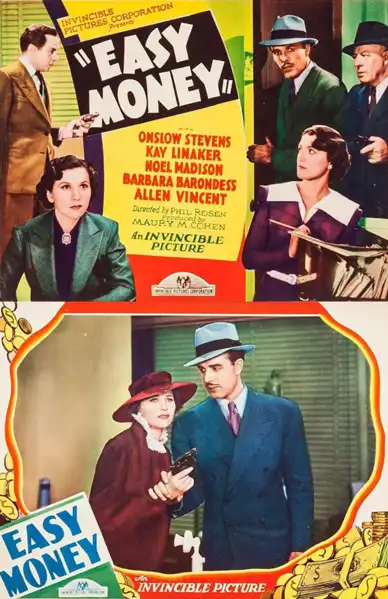
Director's Spotlight: United States
A Deep Dive into the 1936 Vision of Phil Rosen
The artistic breakthrough represented by Easy Money in 1936 highlights the uncompromising vision of Phil Rosen that defines this Crime masterpiece. In the context of United States's rich cinematic history, it captures a specific kind of cinematic magic that is rarely replicated.
In Easy Money, Phil Rosen pushes the boundaries of conventional narrative. The film's unique approach to its subject matter has sparked endless debates and interpretations among cinephiles and critics alike.
| Cinematography | Noir-Inspired |
| Soundtrack | Orchestral |
| Editing | Invisible |
| Art Direction | Kitsch |
Visualizing the convergence of Phil Rosen's style and the core Crime narrative.
Dan Adams resigns his position as prosecutor on the district attorney's staff and sets out to clean up a gang of fake-accident racketeers. He gets a job with an insurance company, and assures the company president he will get the goods on the gang or die in the attempt. At the company offices, he meets Carol Carter and she, believing he is a shyster (possibly redundant) lawyer in the employ of the racketeers gives him as little help as possible. Dan visits his brother Eddie, who is mixed up with the gang and tries to make him break away. Eddie is belligerent but finally, because of the pressure brought by Dan and his wife Tonia, agrees to go straight. The gang, led by "Duke" Trotti, fears he will squeal and they kill him, plus they make his death look like an accident and plan to collect on it. Dan is closing in on the gang when Carol, who is now his assistant, comes up with some conclusive evidence, but "Duke" has plans to get rid of her before she can give the information to Dan.
Decades after its release, Easy Money remains a vital piece of the cinematic puzzle. Its influence can be seen in countless modern works, solidifying Phil Rosen's status as a master of the craft in United States and beyond.