
DbcultAccessing Vault...
Director's Spotlight
Senior Film Conservator
Director's Spotlight: United States
A Deep Dive into the 1924 Vision of Phil Rosen
Exploring the Drama underpinnings of This Woman leads us to the stylistic boundaries pushed by Phil Rosen during the production. Through a lens of existential fatalism and Drama tropes, it continues to spark endless debates among critics and cinephiles alike.
In This Woman, Phil Rosen pushes the boundaries of conventional narrative. The film's unique approach to its subject matter has sparked endless debates and interpretations among cinephiles and critics alike.
| Cinematography | Handheld |
| Soundtrack | Synth-Heavy |
| Editing | Disjunctive |
| Art Direction | Baroque |
Visualizing the convergence of Phil Rosen's style and the core Drama narrative.
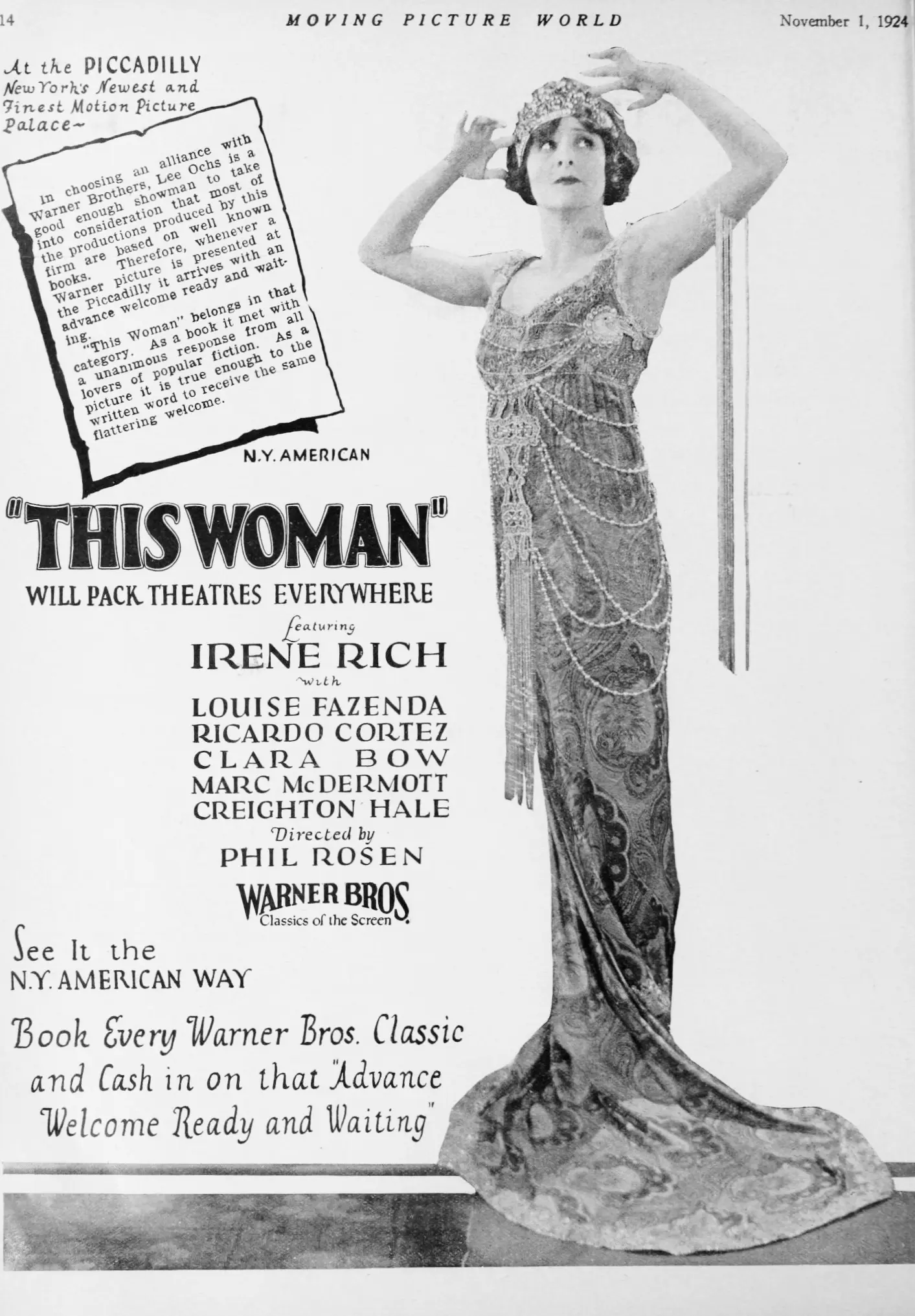
Facing poverty, Carol Drayton is prevented from suicide by Rose, a woman of the streets, who buys Carol a meal in a cafe of questionable reputation. The cafe is raided, and Carol is arrested and jailed on the false testimony of wealthy Gordon Duane. When she is released, Carol is again penniless until intoxicated Bobby Bleeker pays her to sing beneath the window of his sweetheart, Aline Sturdevant, where she is discovered by Stratini, a famous impresario. While studying with Stratini, Carol is blackmailed by the butler. Whitney Duane (Gordon's brother) falls in love with her but doubts her because of the gossip, and Carol incurs Aline's wrath by borrowing money from Bobby for Rose. Carol finally realizes her love for Stratini, who has remained loyal to her, and they are married.
Decades after its release, This Woman remains a vital piece of the cinematic puzzle. Its influence can be seen in countless modern works, solidifying Phil Rosen's status as a master of the craft in United States and beyond.