
DbcultAccessing Vault...
Director's Spotlight
Senior Film Conservator

Director's Spotlight: United States
A Deep Dive into the 1915 Vision of Phillips Smalley
Witnessing the stylistic transformation of cult through Scandal reveals the provocative questions that Phillips Smalley poses to the United States audience. Exploring the nuances of the human condition with cult flair, it showcases the power of cult as a tool for social commentary.
In Scandal, Phillips Smalley pushes the boundaries of conventional narrative. The film's unique approach to its subject matter has sparked endless debates and interpretations among cinephiles and critics alike.
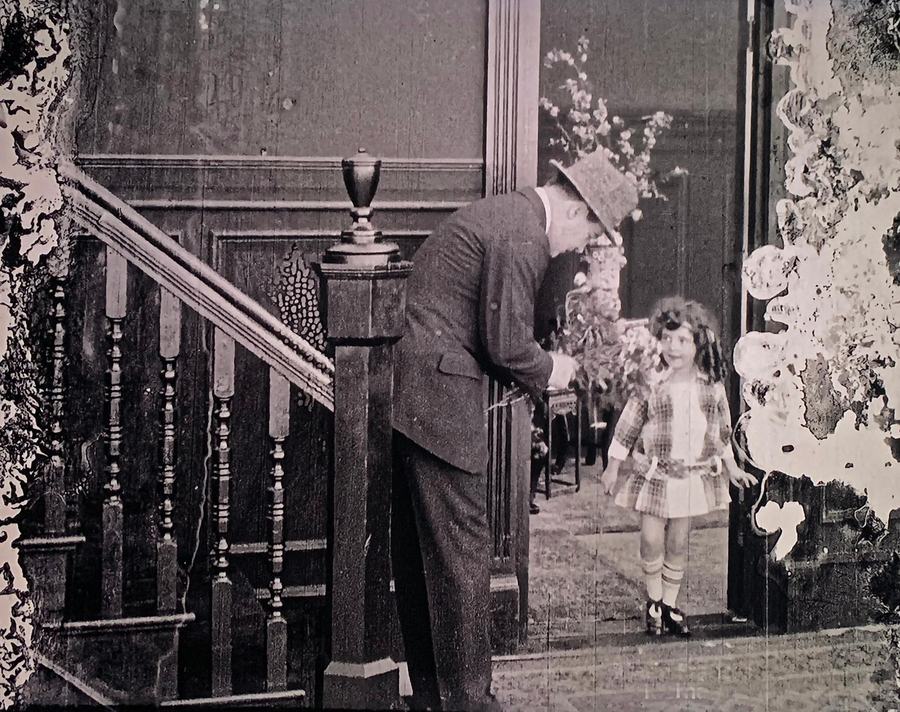
To fully appreciate Scandal, one must consider the cinematic climate of 1915. During this period, United States was undergoing significant artistic shifts, and Phillips Smalley was at the forefront of this cult movement, often challenging established norms.
| Cinematography | Handheld |
| Soundtrack | Experimental |
| Editing | Invisible |
| Art Direction | Kitsch |
Visualizing the convergence of Phillips Smalley's style and the core cult narrative.
The story opens with the male gossips inside the club gazing from the window and making comments on the passers-by. Green, a member of the club, lives in the apartment beneath that of William Wright, a broker. Wright is in business difficulties, but his business associates have not yet learned this, as his wife's father has promised to relieve the situation with a loan. Daisy Dean, Wright's stenographer, is in his confidence. Daisy has her foot caught in the elevator of the building and Mr. Wright takes her home in his car. As he passes the club window, the gossips and Green see him with Daisy and slander is started. Green, coming home, tells his wife of Wright's joy ride with his office girl. Their servant overhears and quickly calls the news up the dumbwaiter to Mrs. Wright's maid in the flat above. Mrs. Wright enters in time to hear the discussion and her slumbering jealousy is fanned into a flame. In Daisy's neighborhood her ride in Mr. Wright's car has occasioned some comment, especially from Susan, an old maid aunt next door, whose brother, Robert, has long loved Daisy in secret. Daisy is engaged to Austin Clark. Mrs. Wright has particularly noted that the stenographer always has a bunch of daisies on her desk. In the most innocent fashion, Mr. Wright comes home with one of the flowers in his button-hole. The fact that Daisy is seen morning and evening in Mr. Wright's car gives color to the lies that are now freely circulating. Daisy and Austin quarrel and part. Mrs. Wright haunts Daisy's neighborhood in a taxicab and has her worse suspicions confirmed in the fact that her husband is seen outside. Without giving him a chance, she leaves him. The father withdraws his financial support and ruin overtakes Wright. One morning the newspaper has an item which reads: "Wife of broker leaves him on eve of his bankruptcy. Mrs. William Wright returns to her father's house. She will apply for divorce from her husband, naming his stenographer. Daisy Dean, as co-respondent." By the time the gossips get through with Daisy Dean, she is glad to marry Robert, next door, for protection. On the day of her wedding. Austin repents his hastiness and writes that he has never ceased to love her, but it is too late and Daisy hides the letter with his photograph. Wright, broken and penniless, is saved from suicide by his old mother. Time passes and the old trouble seems forgotten. In their new happiness, Daisy and Robert and their baby go to a seaside town for the summer. Robert's work calls him away and his sister, Susan, in spite of her dislike of Daisy, comes to stay with her during his absence. In the meantime, Austin, who is now engaged to a girl in the town, comes down for his vacation. He and Daisy meet and he introduces the two women. Daisy remembers his photograph and letter hidden away; gets them out and burns them, but Susan recovers the end of the letter, which was burned and which reads: "I have never ceased to love you. Austin." She sends the letter to her brother. Daisy is included in many of their engagement festivities in a perfectly innocent way, but to Susan's suspicious mind there can only be one conclusion placed upon their intimacy. The letters and insinuations to Robert breathe such suspicion against Daisy and Austin that he is driven almost mad. Finally, unable to work, he returns home without notifying his wife. The same evening, Daisy has joined Austin and a party of their friends in an auto ride out of town for dinner. A series of accidents to the car, miles from nowhere, detain them until dawn. A cottager, who proves to be Mr. Wright, assists them. Robert reaches his home about daylight in a condition bordering on insanity. He is met by Susan with the news that Daisy has been out all night with Austin. The auto party, having stopped at the sweetheart's home, drops her and her parents first and Austin then escorts Daisy to her cottage. On entering the house, Daisy is confronted by Robert and Susan. A terrible scene takes place, during which Robert's self-control is entirely lost. Austin, returning from the garage, passes the house and is shot dead by Robert, who is taken into custody. Daisy, terror-stricken, takes her baby and hastens as far from the town as her strength will carry her. At last, more dead than alive, she sees no hope for herself but death and is about to end her life and the baby's when she is saved by Mr. Wright, who takes her to his mother. The shock of the tragedy kills Robert's sister, while Daisy receives the following letter: "Do not come home, I am disgraced enough. Your Mother." News reaches the clubroom that Mr. Wright and Daisy Dean are living in the same house and the scandal goes on.
Decades after its release, Scandal remains a vital piece of the cinematic puzzle. Its influence can be seen in countless modern works, solidifying Phillips Smalley's status as a master of the craft in United States and beyond.