
DbcultAccessing Vault...
Director's Spotlight
Senior Film Conservator

Director's Spotlight: United States
A Deep Dive into the 1914 Vision of Phillips Smalley
The 1914 release of The Merchant of Venice marked a significant moment for the enduring legacy of Phillips Smalley's artistic contribution to the genre. By challenging the status quo of 1914 cinema, it has cemented its place in the global cult cinema archive.
In The Merchant of Venice, Phillips Smalley pushes the boundaries of conventional narrative. The film's unique approach to its subject matter has sparked endless debates and interpretations among cinephiles and critics alike.
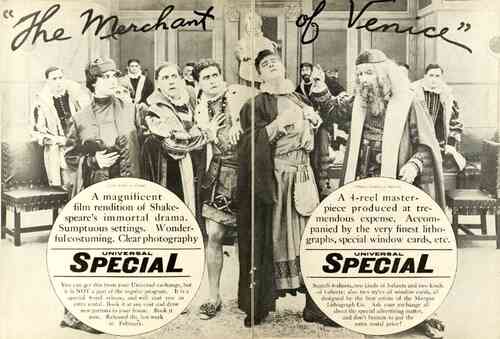
In this work, Phillips Smalley explores the intersection of cult and United States cultural identity. The meticulous attention to detail suggests a deep-seated commitment to pushing the boundaries of the medium, ensuring that The Merchant of Venice remains a relevant topic of study for cult enthusiasts.
| Cinematography | Noir-Inspired |
| Soundtrack | Minimalist |
| Editing | Slow-Burn |
| Art Direction | Brutalist |
Visualizing the convergence of Phillips Smalley's style and the core cult narrative.
A rich merchant, Antonio is depressed for no good reason, until his good friend Bassanio comes to tell him how he's in love with Portia. Portia's father has died and left a very strange will: only the man that picks the correct casket out of three (silver, gold, and lead) can marry her. Bassanio, unfortunately, is strapped for cash with which to go wooing, and Antonio wants to help, so Antonio borrows the money from Shylock, the money-lender. But Shylock has been nursing a grudge against Antonio's insults, and makes unusual terms to the loan. And when Antonio's business fails, those terms threaten his life, and it's up to Bassanio and Portia to save him.
Decades after its release, The Merchant of Venice remains a vital piece of the cinematic puzzle. Its influence can be seen in countless modern works, solidifying Phillips Smalley's status as a master of the craft in United States and beyond.