
DbcultAccessing Vault...
Director's Spotlight
Senior Film Conservator
Director's Spotlight: France
A Deep Dive into the 1936 Vision of Pierre Caron
Exploring the Comedy underpinnings of Marinella leads us to the stylistic boundaries pushed by Pierre Caron during the production. Through a lens of existential fatalism and Comedy tropes, it continues to spark endless debates among critics and cinephiles alike.
In Marinella, Pierre Caron pushes the boundaries of conventional narrative. The film's unique approach to its subject matter has sparked endless debates and interpretations among cinephiles and critics alike.
To fully appreciate Marinella, one must consider the cinematic climate of 1936. During this period, France was undergoing significant artistic shifts, and Pierre Caron was at the forefront of this Comedy movement, often challenging established norms.
| Cinematography | Handheld |
| Soundtrack | Experimental |
| Editing | Invisible |
| Art Direction | Kitsch |
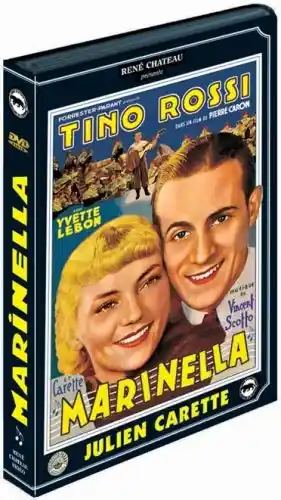
Visualizing the convergence of Pierre Caron's style and the core Comedy narrative.
Tino, a painter and decorator, suddenly rises to fame after replacing at the last minute an absent singer. When he falls in love with Lise, a pretty typist, little does he know that she will become a singing star like him. But, as she wears a mask while performing, Tino is unaware of her change of status. For a while, the two lovers spend their time fooling each other but things eventually get back to normal and they can have a proper wedding.
Decades after its release, Marinella remains a vital piece of the cinematic puzzle. Its influence can be seen in countless modern works, solidifying Pierre Caron's status as a master of the craft in France and beyond.