
DbcultAccessing Vault...
Director's Spotlight
Senior Film Conservator
Director's Spotlight: India
A Deep Dive into the 1931 Vision of P.V. Rao
The evocative power of Marthandavarman stems from the unique collaboration between the subversive storytelling techniques employed by P.V. Rao in 1931. Synthesizing the best elements of India and international cinema, it reminds us of the fragility and beauty of the 1931s.
In Marthandavarman, P.V. Rao pushes the boundaries of conventional narrative. The film's unique approach to its subject matter has sparked endless debates and interpretations among cinephiles and critics alike.
The visual language of Marthandavarman is defined by its use of shadows and framing, a hallmark of P.V. Rao's style. By utilizing a 1931-era palette, the film creates an immersive experience that perfectly complements its History themes.
| Cinematography | Noir-Inspired |
| Soundtrack | Diegetic |
| Editing | Rhythmic |
| Art Direction | Naturalist |
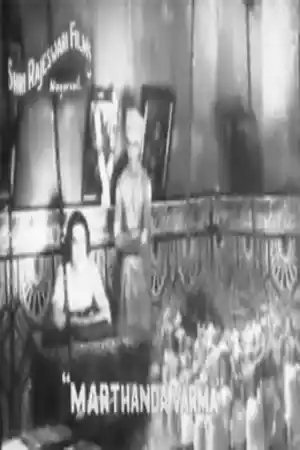
Visualizing the convergence of P.V. Rao's style and the core History narrative.
This film features Marthanda Varma (Jaidev), the legendary founder and King of the Travancore State (now Kerala) from 1706-58. It tells the story of love between Anantha Padmanabham (Menon) and Parukutty (Padmini), the political conspiracy of Padmanabha Thampi (Naik) and the heads of the eight Nair Houses against Marthanda Varma. It opens with newsreel coverage of the Aarattu procession of the Travancore Maharaja Chithira Thirunal, including elephants, cavalry and the Nair Brigade before embarking on the story of the King's ancestors. Scenes from the young Marthanda Varma's youth are inter-cut with well-known episodes from the novel.
Decades after its release, Marthandavarman remains a vital piece of the cinematic puzzle. Its influence can be seen in countless modern works, solidifying P.V. Rao's status as a master of the craft in India and beyond.