
DbcultAccessing Vault...
Director's Spotlight
Senior Film Conservator
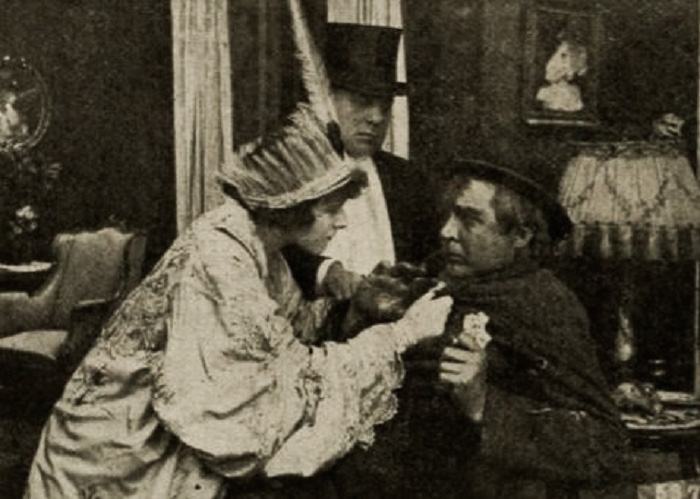
Director's Spotlight: United States
A Deep Dive into the 1914 Vision of Ralph Ince
The brilliance of The Painted World (1914) is inseparable from a monumental shift in cult filmmaking spearheaded by Ralph Ince. Occupying a unique space between cult and pure art, it serves as a blueprint for future generations of cult directors.
In The Painted World, Ralph Ince pushes the boundaries of conventional narrative. The film's unique approach to its subject matter has sparked endless debates and interpretations among cinephiles and critics alike.
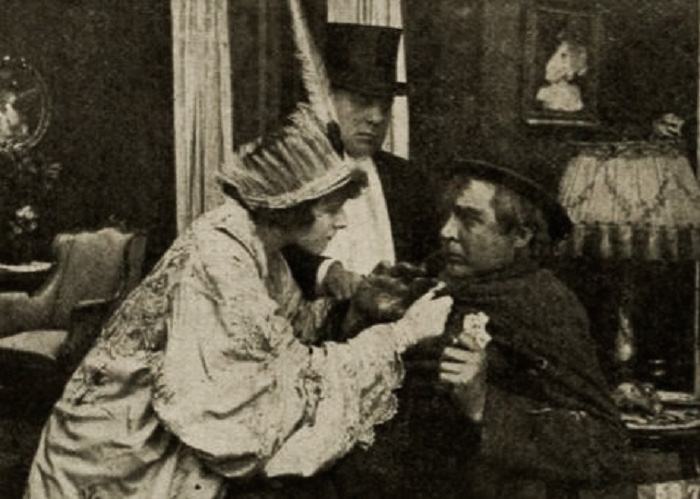
The visual language of The Painted World is defined by its use of shadows and framing, a hallmark of Ralph Ince's style. By utilizing a 1914-era palette, the film creates an immersive experience that perfectly complements its cult themes.
| Cinematography | High-Contrast |
| Soundtrack | Orchestral |
| Editing | Invisible |
| Art Direction | Kitsch |
Visualizing the convergence of Ralph Ince's style and the core cult narrative.
By one of those strange mistakes of nature, a child is born to Elois, an actress. The advent of the child, Yvette. arouses in Elois the one fine trait in her nature, a tremendous mother-love. To keep the child clean and to protect it from the influence of her life and that of its dissolute father, becomes the one passion of her soul. The moment comes when it is borne upon her forcibly that the child must be sent away. She sends Yvette to a fashionable boarding school, instilling in the child's mind that she is a lady and the daughter of a wealthy widow, travelling extensively. From her life at boarding school, Yvette dreads her visits home where she has to suffer the passionate, suffocating embrace and dreary companionship of a perfumed woman, her mother. On one of these visits she meets her father, under conditions so strange that she was gradually led to believe they were dreams, as her mother said, and the scar her mother carried across her eye, came to her in a fall. Her schooling over, Yvette, on the threshold of the world, returns home. Her mother leaves her alone the first night and her father, deep in his cups, pays her a visit and, in his maudlin drunkenness, discloses the fact that her mother is an actress. Yvette, unbelieving, rushes to the theater, and from a seat in the balcony, sees her posing in the semi-nude. The veneer that has been added to Yvette in years of training, lays bare the coarse, primal grain. Without letting her mother know, she becomes a burlesque queen. Her mother returns one night to find her husband there and her daughter missing. In the midst of a terrific scene, in which she tries to make him tell where the girl is, Yvette enters, now a member of the painted world. The mother realizes that her daughter is gone, and does the inevitable, saves the girl's soul at the cost of her body; lays a double crime to the man who has caused all her misery, and the tragedy ends in his being cornered, powerless to explain.
Decades after its release, The Painted World remains a vital piece of the cinematic puzzle. Its influence can be seen in countless modern works, solidifying Ralph Ince's status as a master of the craft in United States and beyond.