
DbcultAccessing Vault...
Director's Spotlight
Senior Film Conservator
Director's Spotlight: United States
A Deep Dive into the 1921 Vision of Ralph Ince
In the grand tapestry of Drama cinema, Tropical Love serves as a bridge between the bold experimentation that has become synonymous with Ralph Ince. Breaking the traditional rules of Drama engagement, it highlights the importance of independent voices in United States.
In Tropical Love, Ralph Ince pushes the boundaries of conventional narrative. The film's unique approach to its subject matter has sparked endless debates and interpretations among cinephiles and critics alike.
To fully appreciate Tropical Love, one must consider the cinematic climate of 1921. During this period, United States was undergoing significant artistic shifts, and Ralph Ince was at the forefront of this Drama movement, often challenging established norms.
| Cinematography | Static |
| Soundtrack | Diegetic |
| Editing | Elliptical |
| Art Direction | Expressionist |
Visualizing the convergence of Ralph Ince's style and the core Drama narrative.
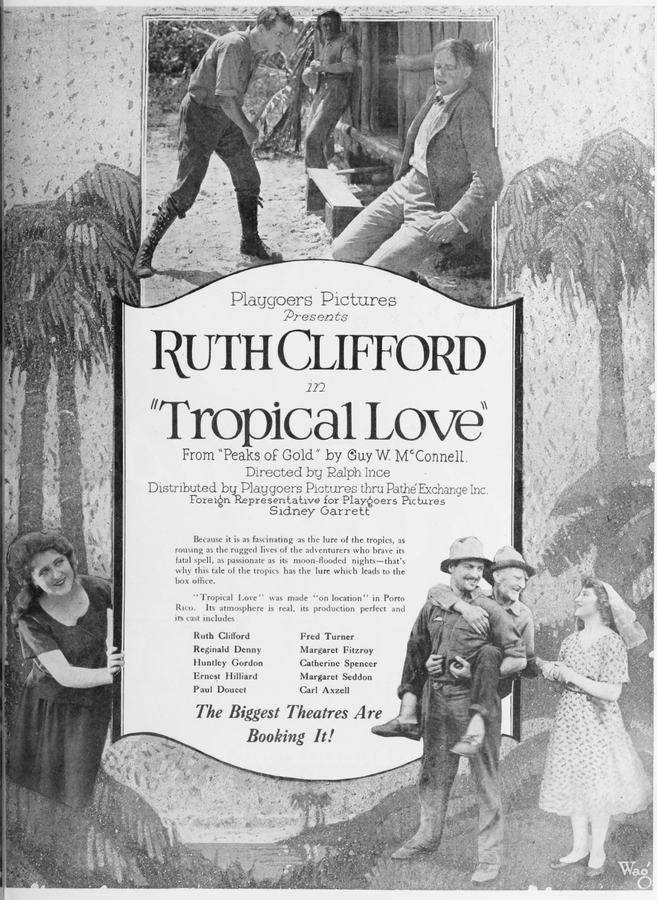
In San Juan, Puerto Rico, The Drifter, young and educated, and The Seeker, old and feeble-minded, meet and form a partnership. The Seeker meets Rosario, unaware that she is his daughter, left there 20 years previously when his mind was affected by a tropical storm that killed his wife and wrecked his home. Rosario is deeded land belonging to her father and is about to sell it to Clifford Fayne when The Seeker discovers gold there and urges her to desist. Fayne lures her to a cabin and tries to force her to sign the bill of sale; The Drifter and her father rescue her; the father is mortally wounded but lives long enough to learn that Rosario is his daughter and that she will be happy with The Drifter.
Decades after its release, Tropical Love remains a vital piece of the cinematic puzzle. Its influence can be seen in countless modern works, solidifying Ralph Ince's status as a master of the craft in United States and beyond.