
DbcultAccessing Vault...
Director's Spotlight
Senior Film Conservator
Director's Spotlight: United States
A Deep Dive into the 1935 Vision of Ralph Murphy
As we revisit the 1935 masterpiece Men Without Names, we are struck by the meticulous attention to detail that Ralph Murphy applied to every frame. Anchored by a narrative that is both personal and universal, it bridges the gap between traditional Drama and contemporary vision.
In Men Without Names, Ralph Murphy pushes the boundaries of conventional narrative. The film's unique approach to its subject matter has sparked endless debates and interpretations among cinephiles and critics alike.
While deeply rooted in United States, Men Without Names has achieved a global reach, influencing directors from various backgrounds. Its ability to translate Drama tropes into a universal cinematic language is why it remains a cult staple decades after its 1935 release.
| Cinematography | Handheld |
| Soundtrack | Experimental |
| Editing | Invisible |
| Art Direction | Kitsch |
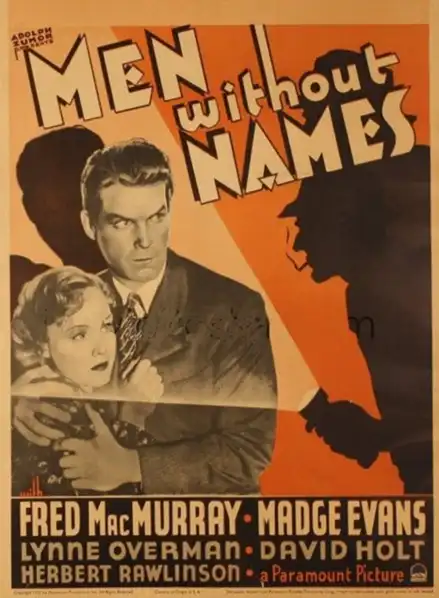
Visualizing the convergence of Ralph Murphy's style and the core Drama narrative.
This story about the U.S. Department of Justice and its agents begins with a daring mail-truck robbery by a ruthless gang that flees to the western U.S. after the robbery. When money from the robbery shows up in a small Kansas town, the department sends agent Dick Grant to investigate, posing as a businessman. He is hindered in his assignment by local newspaper reporter Helen Sherwood, and when he falls in love with her, he is unable to reveal to her who he really is and why he is there.
Decades after its release, Men Without Names remains a vital piece of the cinematic puzzle. Its influence can be seen in countless modern works, solidifying Ralph Murphy's status as a master of the craft in United States and beyond.